North Africa’s Economy

Global Energy Markets Jolt as Iran War Disrupts Gulf Oil Flows
Oil prices surged toward $119 per barrel as the conflict involving Iran disrupted tanker traffic through the Persian Gulf, forcing several Gulf producers to reduce output and pushing governments to consider emergency energy measures. Saudi Arabia joined Iraq, Kuwait, Qatar, and the UAE in cutting production as shipments stalled and storage capacity tightened. With hundreds of tankers idling near the Strait of Hormuz and major shipping insurers suspending coverage, the crisis is rapidly evolving from a regional military conflict into a global energy shock.
Energy Markets Are Reacting to Iran, But Not Panicking Yet
Energy markets often react before the rest of the economy when geopolitical crises erupt. Oil has surged toward $90 per barrel as traders price the risk of disruption around the Strait of Hormuz, while European natural gas remains relatively calm but structurally exposed through LNG shipping routes. Together, the charts suggest markets are pricing risk, not yet a supply shock, as the conflict involving Iran enters its early phase.
Morocco’s Deficit Widens in Trade With Turkey
Trade between Turkey and Morocco has accelerated sharply, surpassing $5 billion in recent exchanges and strengthening Ankara’s position in the Moroccan market. While the expansion reflects deeper economic integration, Moroccan policymakers are seeking investment-based solutions to address a widening trade imbalance and position the country as a regional production hub ahead of the 2030 World Cup.
Moroccan pharmacy unions push back against proposed ownership reforms
Moroccan pharmacists’ unions are urging regulators and the professional Order to reject proposals that would allow outside investors to hold stakes in pharmacies. They argue the change could weaken professional independence, reshape pharmacies into commercial projects, and pressure smaller operators that support access to medicines nationwide.
Agriculture: Drought‑Hit 2025 Season Leaves Morocco More Dependent on Cereal Imports, According to FAO
Morocco ended 2025 with a below‑average cereal harvest and higher food inflation, leaving the country more dependent on grain imports going into the 2025/26 marketing year, according to a new country brief from the UN Food and Agriculture Organization (FAO). The report notes that while late‑season rains improved conditions for the winter crop now in the ground, cumulative rainfall during the 2025 growing season was more than 60% below normal in key cereal‑producing areas, sharply curbing yields and forcing authorities to extend subsidy measures and step up import plans to secure supplies.
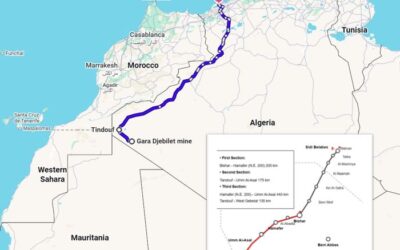
Algeria’s 2,000‑Kilometer Mining Corridor: Rail, Iron Ore, and the Road to the Mediterranean
Algeria’s new rail link between Béchar and the giant Gara Djebilet iron ore deposit in Tindouf is designed as far more than a transport upgrade. By tying the remote southwest directly into Oran and other Mediterranean ports, the single‑track, heavy‑freight line is meant to anchor a 2,000‑kilometer economic corridor that can move millions of tons of iron ore and processed steel products while opening up one of the country’s most isolated regions to passengers, jobs, and investment.
Algeria Expands Core Infrastructure Investment Across Core Sectors
Algeria is scaling up investment in core infrastructure as part of a long-term strategy spanning transport, water security, energy, and mining. Backed by multi-billion-dollar allocations in the 2026 state budget, the program targets roads, railways, ports, airports, and large-scale hydraulic projects, alongside major mining developments linked to new logistics corridors.
Authorities frame the effort as both an economic and social priority, aimed at improving service reliability, supporting industrial growth, and reducing regional disparities, particularly in remote southern areas. Several projects rank among the largest of their kind in Africa and reflect a continued reliance on state-led development to address structural challenges
Morocco’s Lawyers Push Back Against Proposed Changes to Bar Governance
A proposed law governing Morocco’s legal profession has triggered protests and a nationwide strike, as lawyers accuse the Justice Ministry of sidelining consultations and expanding executive oversight. The dispute suggests broader tensions over professional independence, regulatory authority, and the future of Morocco’s legal market.
Burkina Faso: Deep Supply Weaknesses in Ouagadougou Amid Seasonal Butane Shortages
Each year between December and January, Ouagadougou faces a renewed shortage of butane gas just as household demand peaks. The recurring tension on supply, linked to limited stocks, uneven distribution and a shortage of empty cylinders for refilling, is forcing many families to fall back on charcoal and firewood, with financial, health and environmental consequences.
Air Algérie Expands Long-Haul Capacity With Second A330-900neo
Air Algérie has added a second Airbus A330-900neo to its fleet as part of a gradual long-haul renewal program. The aircraft has been assigned to routes linking Algiers with Dubai, Beijing, and Guangzhou, reflecting a focus on maintaining capacity on established intercontinental markets rather than rapid network expansion.