Nigeria’s Woro massacre in early February 2026 was a large‑scale attack on two mainly Muslim farming communities that left Muslim and Christian civilians dead, including adults and children, community leaders, and people living on the economic margins. Local leaders...
MEA RISK’s SHIELD & ALERT notifications: Access requires installing Shield & Alert mobile application. More info on S&A here or click here to signup and install
Nigeria Adjusts Airstrike Strategy Under Expanded U.S. Security Cooperation
Nigeria is adjusting how it conducts air operations against armed groups as part of an updated security arrangement with the United States. Under the new framework, Nigerian fighter aircraft will increasingly rely on U.S. reconnaissance and intelligence-gathering...
Nigeria: Questions Mount Over U.S. Airstrikes in Northern Nigeria
By Leslie Varenne, MondAfrique: The American strikes carried out in Nigeria on Christmas Day raise serious questions. Beyond the confusion surrounding the objectives of the operation, inconsistencies in official statements, and the unclear nature of the targets, the...
U.S. Immigration Policy and the Changing Landscape of Africa-U.S. Travel
As the United States prepares to implement a new round of immigration and visa policy changes in 2026, the effects are being felt across Africa and parts of the Middle East. What began as a technical overhaul of screening and enforcement procedures has evolved into a...
Nigerian president Tinubu under pressure to avoid war with northern neighbor Niger
By Camille Malpat with Aminu Abubakar in Kano, Nigeria: Political leaders in Nigeria are urging President Bola Tinubu to reconsider a threatened military intervention against junta leaders in neighbouring Niger, ahead of a Sunday deadline to reinstate the country's...
Nigeria grapples with end of fuel subsidy
By Alexandre Martins Lopes: Nigerians are struggling with surging fuel prices after newly elected President Bola Tinubu declared an end to popular subsidies, a move analysts and experts said was long overdue. On his first day in office, Tinubu kept to his campaign...
Nigeria ends segmentation of Forex markets, OKs free trading on naira
Posted On 15 June 2023
Nigeria’s central bank has abolished the country’s multiple exchange rate system and effectively floated the naira currency, the bank said, as new President Bola Ahmed Tinubu revamps the country’s monetary policies. Economists, the World Bank and IMF had long urged Nigeria to abandon the complex exchange mechanism and capital controls put into place under former President Muhammadu Buhari as a way to encourage investment in Africa’s largest economy and top oil producer.
In a statement late Wednesday, the Central Bank of Nigeria said it had ended the “segmentation” of forex markets, with transactions to be carried out only through one so-called “Investors and Exporters” category. The naira will also be traded at a “willing buyer, willing seller” market rate instead of regulated rates against the US dollar and other currencies, the statement said. “All segments are now collapsed into the Investors and Exporters window,” it said in a statement posted on its website.
The naira currency had officially traded at around 460 to the dollar last week, but by the end of official trade on Wednesday it had closed at around 660 to the dollar, according to local traders and analysts. “It is effectively both a devaluation as well as a deregulation,” said Tunde Ajileye, an analyst at Nigeria’s SBM Intelligence. “A lot of the market distortions that were there because the central bank and the Nigerian government were trying to control the FX price, will go. So its positive.”
The controls had created a back up in demand for foreign currency and a thriving black market or parallel trade where the naira was selling at around 750 to the greenback. Foreign airlines operating in Nigeria, for example, had often complained of their inability to expatriate millions of dollars of their earnings because of the controls. The forex shakeup is just one of a raft of decisions taken by former Lagos State governor Tinubu since he came to presidency two weeks ago promising reforms to revitalise the economy of Africa’s most populous nation.
On his May 29 inauguration, Tinubu ended the country’s long-standing subsidy on petrol prices to keep them artificially low but which cost of billions of dollars for the cash-strapped government. Fuel prices almost tripled across Nigeria after Tinubu announced that subsidies were “gone”, but most analysts say the measure was needed to end to help the government cut spending.
A week ago, Tinubu’s government also suspended the country’s central bank chief who was later detained by domestic security services as part of an investigation into his time in office. Tinubu on Wednesday also suspended the country’s anti-corruption chief as part of an investigation into allegations of abuse of office, the government said, and he was later questioned by domestic security services.
AFP
Recent News from Nigeria
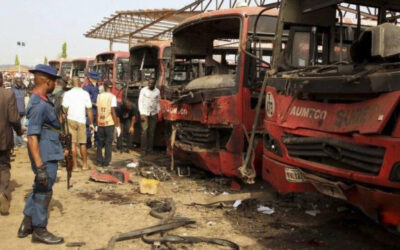
The Nigeria Precedent: Why Degrading One Group Won’t Secure Mali
Seven months into an air campaign against ISWAP and Boko Haram, Nigeria’s broader insecurity crisis remains largely untouched. As Washington weighs a similar strike option against JNIM in Mali, the Nigeria case raises hard questions about what airpower can actually buy.
Nigeria: More than 160 people killed in Muslim communities in Kwara State
More than 160 people were killed in predominantly Muslim farming communities in Kwara State, Nigeria, after villagers reportedly refused to accept an extremist group’s strict religious rule.
Nigeria Adjusts Airstrike Strategy Under Expanded U.S. Security Cooperation
Nigeria is modifying how it conducts air operations against armed groups under a revised security arrangement with the United States. The new framework places greater emphasis on U.S. intelligence and reconnaissance support while shifting operational responsibility to Nigerian forces. The approach reflects Abuja’s effort to balance external assistance with domestic control amid ongoing security challenges in the country’s northwest.