Maghreb Edition

Egypt: Death toll reaches 49, as government declares state of emergencyF

Posted On 10 April 2017

Number of times this article was read : 481

The North Africa Journal – April 10, 2017 – President Abdel Fatah al-Sissi declared a three-months state of emergency across the country following the two church attacks that left at least 49 dead. The attacks were claimed by the Islamic State according to the Amaq News Agency, an agency tied to the militant group.

Tension within the Coptic community has risen substantially since the attacks as clashes broke out when officials of the provincial government tried to enter the church. Outside the church in Tanta on Sunday, both Christian and Muslim residents criticized the government and demanded accountability.

The road ahead for Egypt looks very challenging. The Sisi government will likely see further erosion in public confidence, as militants will seize the opportunity to maintain pressure. We anticipate the government and the military will likely respond with more repressive measures.


Subscribe to Urgent Notifications and Newsletter

Most Recent Stories from the Region

Sahel: Niger Emerges as Key Battleground as JNIM and Islamic State CollideF

A defection, a blood feud, and overlapping territorial ambitions are pushing JNIM and the Islamic State Sahel Province into direct competition across western Niger. The outcome around the region of Dosso could determine whether Sahelian jihadist violence stays fragmented — or consolidates into a wider regional arc.

Egypt’s Summer Blackouts Return as Energy Stress Reappears$

Egypt is facing another round of summer power disruptions, with prolonged outages reported across several governorates. The latest blackouts revive questions about grid resilience, official readiness, and the country’s recurring energy crisis.

Summer in North Africa: Heat, Fire, and Failing Power Grids$

Summer in North Africa: Heat, Fire, and Failing Power Grids$

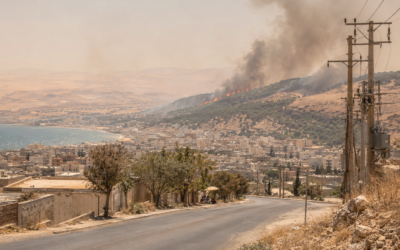
Extreme heat is gripping Morocco, Algeria, Tunisia, Egypt, and Libya at once, with wildfires spreading across Algeria and power grids buckling under demand in Egypt. Regional meteorologists say the pattern reflects a longer-term warming trend rather than a single bad summer.

Written by The North Africa Journal

The North Africa Journal is a leading English-language publication focused on North Africa. The Journal covers primarily the Maghreb region and expands its general coverage to the Sahel, Egypt, and beyond, when events in those regions affect the broader North Africa geography. The Journal does not have any affiliation with any institution and has been independent since its founding in 1996. Our position is to always bring our best analysis of events affecting the region, and remain as neutral as humanly possible. Our coverage is not limited to one single topic, but ranges from economic and political affairs, to security, defense, social and environmental issues. We rely on our full staff analysts and editors to bring you best-in-class analysis. We also work with sister company MEA Risk LLC, to leverage the presence on the ground of a solid network of contributors and experts. Information on MEA Risk can be found at www.MEA-Risk.com.