Nigeria’s Woro massacre in early February 2026 was a large‑scale attack on two mainly Muslim farming communities that left Muslim and Christian civilians dead, including adults and children, community leaders, and people living on the economic margins. Local leaders...
MEA RISK’s SHIELD & ALERT notifications: Access requires installing Shield & Alert mobile application. More info on S&A here or click here to signup and install
Nigeria Adjusts Airstrike Strategy Under Expanded U.S. Security Cooperation
Nigeria is adjusting how it conducts air operations against armed groups as part of an updated security arrangement with the United States. Under the new framework, Nigerian fighter aircraft will increasingly rely on U.S. reconnaissance and intelligence-gathering...
Nigeria: Questions Mount Over U.S. Airstrikes in Northern Nigeria
By Leslie Varenne, MondAfrique: The American strikes carried out in Nigeria on Christmas Day raise serious questions. Beyond the confusion surrounding the objectives of the operation, inconsistencies in official statements, and the unclear nature of the targets, the...
U.S. Immigration Policy and the Changing Landscape of Africa-U.S. Travel
As the United States prepares to implement a new round of immigration and visa policy changes in 2026, the effects are being felt across Africa and parts of the Middle East. What began as a technical overhaul of screening and enforcement procedures has evolved into a...
Nigerian president Tinubu under pressure to avoid war with northern neighbor Niger
By Camille Malpat with Aminu Abubakar in Kano, Nigeria: Political leaders in Nigeria are urging President Bola Tinubu to reconsider a threatened military intervention against junta leaders in neighbouring Niger, ahead of a Sunday deadline to reinstate the country's...
Nigeria grapples with end of fuel subsidy
By Alexandre Martins Lopes: Nigerians are struggling with surging fuel prices after newly elected President Bola Tinubu declared an end to popular subsidies, a move analysts and experts said was long overdue. On his first day in office, Tinubu kept to his campaign...
Nigerians fed up with police brutality and a decrepit government
Posted On 16 October 2020
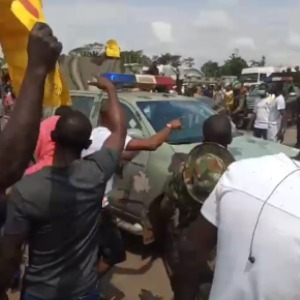
Protests against police brutality in Nigeria have brought Africa’s largest city to a standstill and dominated social media, channelling anger among the frustrated youth that has forced the government to listen. From raising funds online to influencers drawing big crowds, the campaign has topped Twitter worldwide and received support from some of Africa’s biggest celebrities.
In Lagos, Abuja, Port Harcourt and other cities, young protesters have sang and danced, sprayed graffiti and snapped themselves for Instagram as they brandish placards reading “stop police violence”, “no justice, no peace”. “This is unprecedented,” Udo Jude Ilo from the Open Society Initiative in West Africa told AFP, pointing out that protests in Nigeria are normally organised by political parties or unions. “Young people who are usually seen as removed from governance were now asking the hard questions.”. The movement first targeted the police’s notorious federal Special Anti-Robbery Squad (SARS) after a video of an officer allegedly killing a man went viral.
The hashtag “EndSARS” was trending worldwide on Twitter late last week, part of the campaign led by young people in Africa’s most populous country, where the median age is 18. The government announced on Sunday that it was disbanding the unit — which has long been accused of unlawful arrests, torture and extrajudicial killings — and that an independent body would investigate abuse.
But the government has previously promised to end the unit and not followed through, so the protests have continued and even spread, the country’s youth vowing to hold the authorities accountable.
‘Learnt not to trust’
“It’s no news to us that things are said but not actually done,” said Anita Izato, a young lawyer based in the capital Abuja. “We’ve learnt not to trust until we see actions.” “For me it’s personal because I have five brothers, and police usually target young men,” said the 24-year-old, who helped spearhead demonstrations.
In a country ruled by an entrenched elite dominated by ageing politicians, it is most often the young who suffer from the impact of corruption, violence and a lack of opportunities. Victims of police abuse in Nigeria are often between 16 and 35 years old according to data collected by SBM Intelligence, a research and data consultancy. “Mobilisation has been huge because the youth actually faces an injustice that they can all relate to, that goes beyond tribes and family backgrounds,” Leo Dasilva, a 28-year-old equity investor and real estate developer who has nearly 100,000 followers on Twitter, told AFP.
One of the main differences with previous protests, according to SBM Intelligence analyst Confidence MacHarry, is that internet penetration has grown in recent years and police brutality is now often shown and shared online. Obong Roviel, who has nearly 300,000 Twitter followers, is one of many who has been galvanising support — but he rejects the term “leader”.
“I’m just a conscientious citizen like others affected by police brutality. I’m not an activist, I don’t play any role, I just use my voice,” the 23-year-old told AFP. “There is no leader and that is why the protests have been sustained this long,” he said. “This mobilisation has been all about the connections of the youth, the ones out there on the streets, raising funds, using their influence correctly, the youths who are public figures telling everyone to stand firm and the youths in diaspora that really care.”
Stars back protests – Fuelling the protests has been the high-profile support from some of Africa’s biggest stars who have previously been seen as steering clear of politics. Musician Davido was at the forefront of protests in Abuja while Afropop star Wizkid made a noticed appearance at a gathering in front of the Nigerian embassy in London. “That matters,” music journalist Oris Aigbokhaevbolo told AFP. “There is a hunger for pop musicians to assume leadership in the country, especially in the south where Afropop stars are the most popular figures across social classes.”
American rapper Kanye West also joined in on Monday, tweeting that he stood with his “Nigerian brothers and sisters to end police brutality.” As a second week of protests began and the government made new announcements, many wondered how long the movement would last. “We’ll rest when we get results. We’ll rest when we get a better Nigeria. We’ll rest when police brutality totally disappears,” Izato responded. There is still much uncertainty surrounding the fate of officers suspected or accused of human rights violations as well as the shape and form of the police unit that will replace SARS. “We will continue to monitor what’s going on and report if people are being harassed or any injustice is being carried out,” Obong said. “I think it will be a lifestyle now.”
By AFP Lagos bureau with Louise Dewast in London and Camille Malplat in Paris, AFP
Recent News from Nigeria
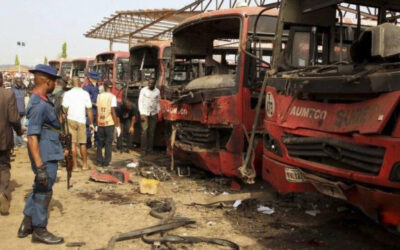
The Nigeria Precedent: Why Degrading One Group Won’t Secure Mali
Seven months into an air campaign against ISWAP and Boko Haram, Nigeria’s broader insecurity crisis remains largely untouched. As Washington weighs a similar strike option against JNIM in Mali, the Nigeria case raises hard questions about what airpower can actually buy.
Nigeria: More than 160 people killed in Muslim communities in Kwara State
More than 160 people were killed in predominantly Muslim farming communities in Kwara State, Nigeria, after villagers reportedly refused to accept an extremist group’s strict religious rule.
Nigeria Adjusts Airstrike Strategy Under Expanded U.S. Security Cooperation
Nigeria is modifying how it conducts air operations against armed groups under a revised security arrangement with the United States. The new framework places greater emphasis on U.S. intelligence and reconnaissance support while shifting operational responsibility to Nigerian forces. The approach reflects Abuja’s effort to balance external assistance with domestic control amid ongoing security challenges in the country’s northwest.