FOCUS ON
MOROCCO
Click here to sign up for free weekly email
Email recaps are sent every Thursdays.
Sign up today
Security: Hackers Publish Names Tied to Morocco’s Police and Intelligence Services
Hackers operating as Jabaroot published four spreadsheets naming more than 70,000 alleged members of Morocco’s police and intelligence directorates, branding the release around the July 30 Ceuta border breach. European services reviewing the files consider the names genuine but dated, and accounts of their origin conflict sharply. Rabat has not responded, leaving the hackers’ framing to circulate unchallenged in Madrid and Brussels.
Morocco Faces Balancing Test Over Potential Gaza Security Role
A reported plan for a Moroccan military outpost in Gaza is raising questions about Rabat’s regional strategy. While participation in a multinational stabilization force could be framed as humanitarian and security support, a visible troop presence inside an Israeli-controlled area risks political backlash at home and abroad. The proposal highlights the tension between Morocco’s ties to Israel and its longstanding positioning as a supporter of Palestinian interests.
Morocco: Rights Group Says it Documented 130 Deaths Among Would-Be Migrants in Morocco-Spain Border Breach Disaster
The official death toll from a mass border crossing into the Spanish North African enclave of Ceuta has risen to at least 72, but a rights group says it knows of 130 deaths and so many others missing. Morocco and Spain are facing growing pressure to explain how tens of thousands of people managed to force their way into European territory in a matter of days.
Spies, Lies, and a Border Overrun: Morocco’s Bad Week
Morocco is facing scrutiny on two fronts this summer: a corroborated investigation alleging systematic use of Pegasus spyware against journalists and foreign officials, and a fresh migrant surge into Ceuta that echoes the 2021 border crisis. Both developments draw scrutiny of Morocco from European governments and beyond, each for different reasons — one a question of covert surveillance, the other of border management under pressure.
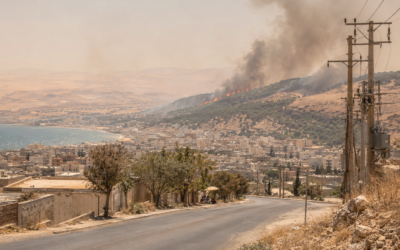
Summer in North Africa: Heat, Fire, and Failing Power Grids
Extreme heat is gripping Morocco, Algeria, Tunisia, Egypt, and Libya at once, with wildfires spreading across Algeria and power grids buckling under demand in Egypt. Regional meteorologists say the pattern reflects a longer-term warming trend rather than a single bad summer.
OCP’s Sulfur Shock Exposes the Weak Link in Morocco’s Fertilizer Empire
How a company thousands of miles from the Hormuz is feeling the squeeze as disruptions in the strait push up fertilizer, fuel, and freight costs across global supply chains. A distant geopolitical shock became a direct hit to OCP’s sulfur supplies and margins.
North Africa and the Sahel on Alert Over Locust Upsurge
FAO monitoring shows Northwest Africa entering a new phase of desert locust activity, with Morocco facing the highest pressure and neighboring countries preparing for possible summer migrations toward Sahelian breeding zones.
Morocco: Draft Law 66.23 Deepens Standoff Between Moroccan Lawyers and Government
Morocco’s courts are facing major delays as a nationwide strike by attorneys over Draft Law 66.23 enters its third week, with lawyers arguing that the proposed overhaul of the legal profession was prepared without adequate consultation and fails to protect defense rights, while the Justice Ministry defends the bill as a necessary modernization of access, training, and client protections.
Morocco’s Labor Market Gaps Push Growing Numbers of Women Toward Seasonal Work in Spain
Morocco sends 14,000–18,000 women to Spain’s farms each year under a growing seasonal work program, even as domestic training and wage gaps persist.
Moroccan Lawyers Stage Open Sit‑In Over Draft Law Reshaping Their Profession
Moroccan lawyers have begun an open‑ended sit‑in outside Parliament in Rabat to protest draft law 66.23 on the organization of the legal profession, saying the bill was prepared without their participation and does not reflect constitutional and institutional safeguards they consider essential to professional independence and fair‑trial rights
Morocco Becomes Africa’s Top-Ranked Industrial Economy
Morocco has become Africa’s leading industrial economy, followed by South Africa and Egypt. The African Development Bank (AfDB) ranked Tunisia fourth, reinforcing North Africa’s position as one of the continent’s principal industrial regions. The AfDB’s 2025 Africa Industrialization Index placed Morocco ahead of South Africa as Africa’s highest-ranked industrial economy.
Jabaroot, the Telegram Account That Has the Moroccan State on Edge
An anonymous Telegram channel known as Jabaroot has become one of Morocco’s most closely watched sources of leaks and sensitive disclosures. By publishing confidential documents, internal information, and allegations involving political, economic, and security figures, the account has fueled speculation, controversy, and concern within Morocco’s institutions. Its true identity remains unknown, adding to its influence and mystique.
Morocco Steps Up Tangier Crackdown on Undocumented Migrants
Moroccan authorities are tightening their grip on irregular migration in and around the northern city of Tangier, stepping up raids and mass arrests of sub‑Saharan migrants who use the region as a launchpad toward Europe.
Morocco Detains Civic Activist Amid Online Speech Concerns
Moroccan authorities have detained Mohammed Khalif,a Casablanca-based member of the youth movement GenZ212, following a home search and seizure of his computer. Charges have not yet been publicly disclosed. His arrest comes days after another GenZ212 member was prosecuted over alleged online incitement, raising questions about the legal climate surrounding youth activism and digital expression in Morocco.
Morocco’s Deficit Widens in Trade With Turkey
Trade between Turkey and Morocco has accelerated sharply, surpassing $5 billion in recent exchanges and strengthening Ankara’s position in the Moroccan market. While the expansion reflects deeper economic integration, Moroccan policymakers are seeking investment-based solutions to address a widening trade imbalance and position the country as a regional production hub ahead of the 2030 World Cup.
Moroccan pharmacy unions push back against proposed ownership reforms
Moroccan pharmacists’ unions are urging regulators and the professional Order to reject proposals that would allow outside investors to hold stakes in pharmacies. They argue the change could weaken professional independence, reshape pharmacies into commercial projects, and pressure smaller operators that support access to medicines nationwide.
Morocco Allegations Reignite Spain’s Pegasus Debate
New reporting has revived scrutiny of the 2021 Pegasus intrusion targeting Prime Minister Pedro Sánchez’s phone, focusing on the Ceuta visit as a potential operational opening and renewing debate over attribution, accountability, and Spain’s wider relationship with Morocco, including questions raised by Morocco’s growing security ties with Israel.
Morocco: Employment Gains Concentrate in Urban Centers as Rural Areas Fall Behind
Morocco’s labor market showed strong job creation in 2025, but the gains were overwhelmingly concentrated in urban areas. While cities absorbed nearly all new employment, rural regions continued to lose jobs, exposing a widening divide that leaves young people, women, and rural workers increasingly disconnected from the recovery.
Morocco Reassures Public on King Mohammed VI’s Mechanical Lumbosciatica
Morocco’s Royal Palace has confirmed that King Mohammed VI is being treated for mechanical lumbosciatica, a lower‑back condition linked to muscle contracture, but has stressed that his situation is not considered serious. Doctors have prescribed medication and rest to ease the pain, and official statements have emphasized continuity of state affairs while reassuring the public that the 61‑year‑old monarch’s health problem is localized and manageable.
Agriculture: Drought‑Hit 2025 Season Leaves Morocco More Dependent on Cereal Imports, According to FAO
Morocco ended 2025 with a below‑average cereal harvest and higher food inflation, leaving the country more dependent on grain imports going into the 2025/26 marketing year, according to a new country brief from the UN Food and Agriculture Organization (FAO). The report notes that while late‑season rains improved conditions for the winter crop now in the ground, cumulative rainfall during the 2025 growing season was more than 60% below normal in key cereal‑producing areas, sharply curbing yields and forcing authorities to extend subsidy measures and step up import plans to secure supplies.
Connect
You can find us on a few social media platforms. Feel free to connect with us there.