



Algiers, March 20, 2020 – For the first time in over a year, the streets of the Algerian capital were quiet and almost empty on Friday, the day of weekly anti-government rallies. The coronavirus threat put paid to what would have been the 57th straight Friday of “Hirak” anti-regime protests since February 22, 2019, leaving mainly policemen, most wearing masks, out on the streets.
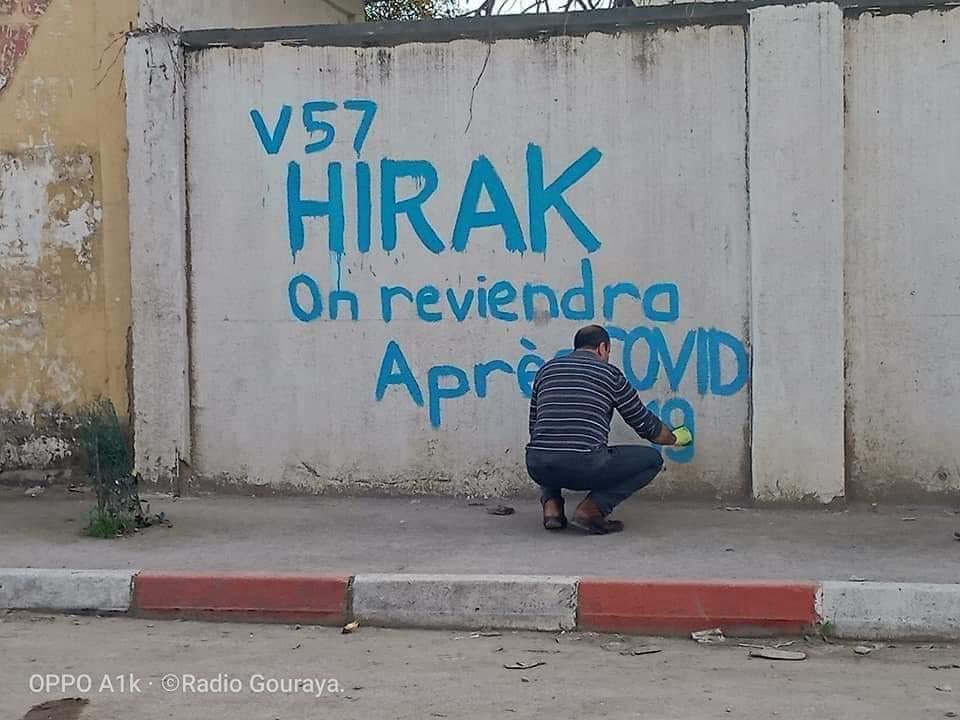 Authorities in Algeria, which has suffered 10 deaths from the new coronavirus and reported 90 confirmed cases of the disease sweeping the globe, have banned marches, while the opposition itself has suspended rallies. The only people venturing out were shoppers, as a municipality van equipped with loud speakers and plastered with health notices broadcast advice for citizens to sanitise their homes and common areas in apartment blocks.
“Marching? You have to be completely irresponsible to continue doing that,” said Said, a 57-year-old father of five and a regular participant in demonstrations, who was out on what he called a “war supplies” outing. He called for fellow Algerians “to protect their families and the country from this virus. We’ll continue the Hirak differently. We will come up with ideas.”
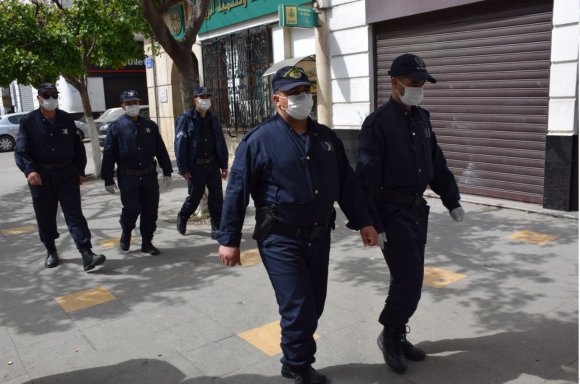
Algerian police have nothing to police. Photo Khaled Drareni.
Algeria has closed down schools, cafes, restaurants and public transport in cities and called off all public gatherings, including in mosques. At the peak of the protest movement, hundreds of thousands of marchers packed the streets of Algerian cities for the Friday rallies to demand a complete overhaul of the political system in the North African country. They kept up the anti-establishment rallies despite the fall last April of longtime president Abdelaziz Bouteflika, although their turnout had weakened. Activists say the Hirak is down, but not out. “Common sense calls for a temporary suspension of marches on the grounds of public health. It’s the best way to keep Hirak going while we jointly consider alternatives,” lawyer Mustapha Bouchachi wrote on Facebook. Independent journalist Khaled Drareni, who has been arrested several times for covering demonstrations, has vowed on Twitter: “We will be back stronger than before.”


