🔒 Subscriber-Only Analysis This in-depth report is reserved exclusively for clients subscribing to The North Africa Journal. 👤 Already a subscriber? Log in here Not a subscriber? Click here for our lowest...
MEA RISK’s SHIELD & ALERT notifications: Access requires installing Shield & Alert mobile application. More info on S&A here or click here to signup and install
Nigeria Adjusts Airstrike Strategy Under Expanded U.S. Security Cooperation
🔒 Subscriber-Only Analysis This in-depth report is reserved exclusively for clients subscribing to The North Africa Journal. 👤 Already a subscriber? Log in here Not a subscriber? Click here for our lowest...
Nigeria: Questions Mount Over U.S. Airstrikes in Northern Nigeria
🔒 Subscriber-Only Analysis This in-depth report is reserved exclusively for clients subscribing to The North Africa Journal. 👤 Already a subscriber? Log in here Not a subscriber? Click here for our lowest...
U.S. Immigration Policy and the Changing Landscape of Africa-U.S. Travel
🔒 Subscriber-Only Analysis This in-depth report is reserved exclusively for clients subscribing to The North Africa Journal. 👤 Already a subscriber? Log in here Not a subscriber? Click here for our lowest...
Nigerian president Tinubu under pressure to avoid war with northern neighbor Niger
By Camille Malpat with Aminu Abubakar in Kano, Nigeria: Political leaders in Nigeria are urging President Bola Tinubu to reconsider a threatened military intervention against junta leaders in neighbouring Niger, ahead of a Sunday deadline to reinstate the country's...
Nigeria grapples with end of fuel subsidy
By Alexandre Martins Lopes: Nigerians are struggling with surging fuel prices after newly elected President Bola Tinubu declared an end to popular subsidies, a move analysts and experts said was long overdue. On his first day in office, Tinubu kept to his campaign...
Economy: Nigeria’s collapsing revenues
Posted On 6 May 2020
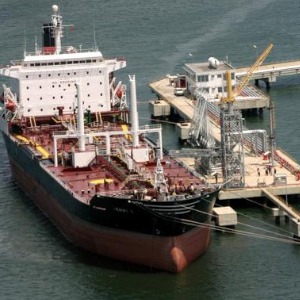
Abuja, May 5, 2020 – Oil-rich Nigeria is losing more than 80 percent of its revenue due to plummeting oil prices and the coronavirus epidemic, officials said on Tuesday. Nigeria depends on crude oil sales for 70 percent of government revenue and 90 percent of foreign exchange earnings but a price war between Russia and Saudi Arabia and overproduction has sent the oil prices on a downward spiral.
“Our projected oil revenue has declined by over 80 percent,” said Ben Akabueze, the head of the Budget Office, in a video conference in Abuja. “We have now had to revise our budget down to $20 per barrel,” he said. “Our estimated net oil and gas revenues are down now from 5.47 trillion naira ($14.1 billion/12.9 billion euros)to 1.12 trillion.” Finance Minister Zainab Ahmed said the country was “facing the twin challenges of the COVID-19 pandemic as well as the crash of the crude oil price.” She said a further review of the benchmark price which was reduced to $30 from $57 in March, was on the cards. “Now we are actually in the process of making an amendment bringing down that revenue key indicator to $20 per barrel,” she said.
Nigeria produces around two million barrels daily. The country emerged from a recession in 2017 and is struggling to finance its budget and pay its bills. On Monday, Nigeria said it had received $311 million stolen by former leader Sani Abacha from the United States and Jersey. The recovered funds would be used to fund infrastructure projects, including roads, a key bridge and power plants, according to officials.
AFP
Recent News from Nigeria
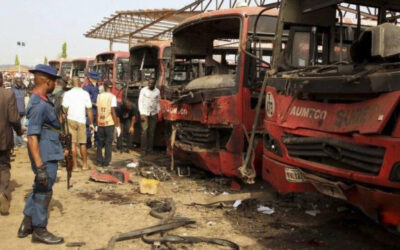
The Nigeria Precedent: Why Degrading One Group Won’t Secure Mali
🔒 Subscriber-Only Analysis This in-depth report is reserved exclusively for clients subscribing to The North Africa Journal. 👤 Already a subscriber? Log in here Not a subscriber? Click here for our lowest...
Nigeria: More than 160 people killed in Muslim communities in Kwara State
🔒 Subscriber-Only Analysis This in-depth report is reserved exclusively for clients subscribing to The North Africa Journal. 👤 Already a subscriber? Log in here Not a subscriber? Click here for our lowest...
Nigeria Adjusts Airstrike Strategy Under Expanded U.S. Security Cooperation
🔒 Subscriber-Only Analysis This in-depth report is reserved exclusively for clients subscribing to The North Africa Journal. 👤 Already a subscriber? Log in here Not a subscriber? Click here for our lowest...