🔒 Subscriber-Only Analysis This in-depth report is reserved exclusively for clients subscribing to The North Africa Journal. 👤 Already a subscriber? Log in here Not a subscriber? Click here for our lowest...
MEA RISK’s SHIELD & ALERT notifications: Access requires installing Shield & Alert mobile application. More info on S&A here or click here to signup and install
Nigeria Adjusts Airstrike Strategy Under Expanded U.S. Security Cooperation
🔒 Subscriber-Only Analysis This in-depth report is reserved exclusively for clients subscribing to The North Africa Journal. 👤 Already a subscriber? Log in here Not a subscriber? Click here for our lowest...
Nigeria: Questions Mount Over U.S. Airstrikes in Northern Nigeria
🔒 Subscriber-Only Analysis This in-depth report is reserved exclusively for clients subscribing to The North Africa Journal. 👤 Already a subscriber? Log in here Not a subscriber? Click here for our lowest...
U.S. Immigration Policy and the Changing Landscape of Africa-U.S. Travel
🔒 Subscriber-Only Analysis This in-depth report is reserved exclusively for clients subscribing to The North Africa Journal. 👤 Already a subscriber? Log in here Not a subscriber? Click here for our lowest...
Nigerian president Tinubu under pressure to avoid war with northern neighbor Niger
By Camille Malpat with Aminu Abubakar in Kano, Nigeria: Political leaders in Nigeria are urging President Bola Tinubu to reconsider a threatened military intervention against junta leaders in neighbouring Niger, ahead of a Sunday deadline to reinstate the country's...
Nigeria grapples with end of fuel subsidy
By Alexandre Martins Lopes: Nigerians are struggling with surging fuel prices after newly elected President Bola Tinubu declared an end to popular subsidies, a move analysts and experts said was long overdue. On his first day in office, Tinubu kept to his campaign...
Nigeria: Insurgency risks expanding beyond the northeast
Posted On 18 May 2020
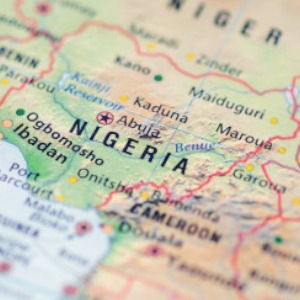
Lagos, May 17, 2020 – Nigerian jihadist groups are gaining sway in the restive northwest and the region could become a “land bridge” to Islamists across the Sahel, the International Crisis Group warned Monday. Northwestern Nigeria has been wracked by years of insecurity involving clashes between rival communities over land, attacks by heavily-armed criminal gangs and reprisal killings by vigilante groups.
The violence has left an estimated 8,000 people dead since 2011 and displaced over 200,000, the Brussels-based research group said in a report released Monday. “As security has deteriorated, the region has steadily come under the renewed influence of jihadist groups, which have also stepped up attacks on security forces,” it said. “The spike in jihadist activity in the North West has raised fears that the region could soon become a land bridge connecting Islamic insurgencies in the central Sahel with the decade-old insurgency in the Lake Chad region of north-eastern Nigeria.”
Nigeria has suffered from a 10-year conflict with fighters from the Boko Haram group and its splinter factions in the northeast of the country that has left over 36,000 people dead. Officials have during the past year sounded the alarm over signs of the growing jihadist influence among the numerous armed groups in the northwest. “Two Boko Haram offshoots are making inroads into the region, where they are forging tighter relationships with aggrieved communities, herder-affiliated armed groups and criminal gangs,” the report said.
One of the factions is an al-Qaeda linked outfit known as Ansaru that broke off from the main Boko Haram group in 2012 and was widely seen as dormant after being dismantled by security forces. The second splinter is the Islamic State West Africa Province (ISWAP), which has become a dominant force in the northeast of Nigeria after declaring allegiance to the Islamic State group in 2016. Both Ansaru and ISWAP have been sending supplies and clerics to the northwest and started claiming credit for attacks in the region, the report said.
In a sign of Ansaru’s growing menace the Nigerian police announced a major operation against the group in February in which it claimed to have killed 250 fighters. The report warned that the “poorly secured international boundary” between Nigeria and Niger to the north “enables the influx of arms and facilitates the movement of jihadists”. Those ties could be fortified and stretch further to Burkina Faso and Mali where jihadists also under the IS banner killed thousands last year. The Nigerian authorities have launched repeated military operations and local peace talks to try to curb the violence in the northwest. But so far neither strategy has succeeded in ending the violence and much of the region remains a security vacuum.
AFP
Recent News from Nigeria
The Nigeria Precedent: Why Degrading One Group Won’t Secure Mali
🔒 Subscriber-Only Analysis This in-depth report is reserved exclusively for clients subscribing to The North Africa Journal. 👤 Already a subscriber? Log in here Not a subscriber? Click here for our lowest...
Nigeria: More than 160 people killed in Muslim communities in Kwara State
🔒 Subscriber-Only Analysis This in-depth report is reserved exclusively for clients subscribing to The North Africa Journal. 👤 Already a subscriber? Log in here Not a subscriber? Click here for our lowest...
Nigeria Adjusts Airstrike Strategy Under Expanded U.S. Security Cooperation
🔒 Subscriber-Only Analysis This in-depth report is reserved exclusively for clients subscribing to The North Africa Journal. 👤 Already a subscriber? Log in here Not a subscriber? Click here for our lowest...