Nigeria’s Woro massacre in early February 2026 was a large‑scale attack on two mainly Muslim farming communities that left Muslim and Christian civilians dead, including adults and children, community leaders, and people living on the economic margins. Local leaders...
MEA RISK’s SHIELD & ALERT notifications: Access requires installing Shield & Alert mobile application. More info on S&A here or click here to signup and install
Nigeria Adjusts Airstrike Strategy Under Expanded U.S. Security Cooperation
Nigeria is adjusting how it conducts air operations against armed groups as part of an updated security arrangement with the United States. Under the new framework, Nigerian fighter aircraft will increasingly rely on U.S. reconnaissance and intelligence-gathering...
Nigeria: Questions Mount Over U.S. Airstrikes in Northern Nigeria
By Leslie Varenne, MondAfrique: The American strikes carried out in Nigeria on Christmas Day raise serious questions. Beyond the confusion surrounding the objectives of the operation, inconsistencies in official statements, and the unclear nature of the targets, the...
U.S. Immigration Policy and the Changing Landscape of Africa-U.S. Travel
As the United States prepares to implement a new round of immigration and visa policy changes in 2026, the effects are being felt across Africa and parts of the Middle East. What began as a technical overhaul of screening and enforcement procedures has evolved into a...
Nigerian president Tinubu under pressure to avoid war with northern neighbor Niger
By Camille Malpat with Aminu Abubakar in Kano, Nigeria: Political leaders in Nigeria are urging President Bola Tinubu to reconsider a threatened military intervention against junta leaders in neighbouring Niger, ahead of a Sunday deadline to reinstate the country's...
Nigeria grapples with end of fuel subsidy
By Alexandre Martins Lopes: Nigerians are struggling with surging fuel prices after newly elected President Bola Tinubu declared an end to popular subsidies, a move analysts and experts said was long overdue. On his first day in office, Tinubu kept to his campaign...
Africa’s newspapers facing collapse amid pandemic
Posted On 9 June 2020
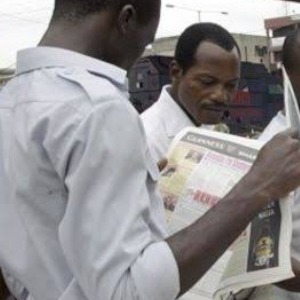
Collapsing revenues, rising layoffs: the coronavirus crisis is battering media outlets across Africa that were already struggling for cash and often facing pressure from hostile authorities. The news of cutbacks was sudden and painful for journalists at two of Nigeria’s most popular independent newspapers when bosses from The Punch and Vanguard made their announcements last month. “It was a rude shock for me because I didn’t do anything wrong to warrant such treatment,” one Punch veteran told AFP, asking not to be named as he was still owed a “token” payoff.
The redundancies were just the latest to hit Nigeria’s press — one of the most vibrant on the continent — as the economic fallout from the pandemic has sent sales and advertising income plunging. “What is happening in Nigeria is not peculiar to us. The whole world is feeling the impact,” said Qasim Akinreti, the chairman of the Lagos Union of journalists. “For us in the Nigerian media, the story is the same — we have lost hundreds of jobs in the past four months.”
Calls for state aid
In Kenya some media houses slashed wages by up to half, in Uganda a leading weekly halted printing, and in Namibia hours have been reduced and redundancy schemes fast-tracked. The speed and severity of the current crunch has sparked calls for government bailouts — with private papers in Cameroon even holding a “dead press” day to denounce a lack of action. Authorities in some countries have heeded the pleas for help. Kenya’s national regulator on Friday unveiled what it called a “historic” fund worth just under $1 million to help some 150 broadcasters weather the storm. “This challenge of COVID-19 has squeezed life from television and radio stations,” said David Omwoyo, the head of the Media Council of Kenya. Officials from Nigeria’s journalist union said it had appealed to President Muhammadu Buhari to provide emergency aid to distressed media. But there are fears that state aid would only increase political interference in sectors around Africa that are already often dominated by powerful vested interests. “The government has been harassing the media. Several journalists are facing trials for frivolous offences,” University of Lagos lecturer Olubunmi Ajibade said of the situation in Nigeria. “Collecting bailout funds from government at this time will compromise their independence and freedom.”
‘Disseminate propaganda’
Just as the spread of the virus has caused revenues to dwindle, it has also posed unprecedented logistical challenges to media outlets. While the official figures — more than 170,000 infections and 4,700 deaths
across the continent — have risen slower than elsewhere on the planet, governments have still imposed tough restrictions. Lockdowns have hampered reporting, social distancing has forced journalists to work remotely with poor internet or electricity supplies, and protective equipment has added new costs. On the streets there have been reports of security forces harassing journalists trying to do their work.
In Ghana — one of West Africa’s most open democracies — soldiers enforcing virus restrictions “assaulted” two reporters in April, the Committee to Protect Journalists said. A raft of countries including South Africa have introduced legislation criminalising the spreading of disinformation about the pandemic. Authorities insist the measures are needed to tackle a flood of dangerous falsehoods surrounding the virus. But media professionals say journalists are already trying to do the job of combatting “fake news” — and such laws could be used to muzzle them.
Lekhetho Ntsukunyane, who heads the Lesotho branch of the Media Institute of Southern Africa, said two journalists in the tiny kingdom were warned under new rules for spreading misinformation — only for it to turn out that their work was accurate. The government of Andry Rajoelina in Madagascar has pushed its control even further and mandated outlets carry all official information about the pandemic. “The regime is taking advantage of this requisition to disseminate propaganda,” said Nadia Raolimanalina, who runs MBS television and two newspapers on the Indian Ocean island nation. “Messages on COVID-19 no longer occupy an important place in the president’s speeches, which must be broadcast in their entirety.” She complained that journalists could not investigate key issues as sources feared “going to prison for spreading false information”. “The official information is incomplete and the state has concealed the real information which risks tarnishing its image.”
AFP
Recent News from Nigeria
Nigeria: More than 160 people killed in Muslim communities in Kwara State
More than 160 people were killed in predominantly Muslim farming communities in Kwara State, Nigeria, after villagers reportedly refused to accept an extremist group’s strict religious rule.
Nigeria Adjusts Airstrike Strategy Under Expanded U.S. Security Cooperation
Nigeria is modifying how it conducts air operations against armed groups under a revised security arrangement with the United States. The new framework places greater emphasis on U.S. intelligence and reconnaissance support while shifting operational responsibility to Nigerian forces. The approach reflects Abuja’s effort to balance external assistance with domestic control amid ongoing security challenges in the country’s northwest.
Nigeria: Questions Mount Over U.S. Airstrikes in Northern Nigeria
The U.S. airstrikes carried out in northern Nigeria on Christmas Day have triggered confusion and skepticism across the region. Conflicting statements from Washington and Abuja, uncertainty over the identity of the targeted groups, and reports from strike locations where no militants were found have raised serious questions about the operation’s objectives. In an already fragile security environment, the lack of clarity risks adding instability rather than addressing Nigeria’s complex security challenges.