



NAJ | 19 March 2021: The Algerian authorities have issued an ultimatum to Moroccan farmers working of the Laaroda Oasis palm grove, located in Beni Ouenif, province of Bechar. The ultimatum was to leave the region by 18 March. AFP reported that the withdrawal happened as planned and Algeria closed the border. In Figuig, on the Moroccan side, the farmers protested on Thursday.
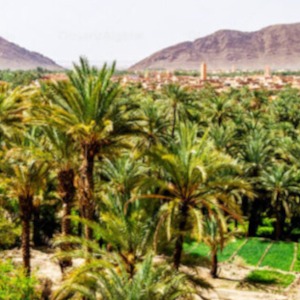 While the Algeria-Morocco border has been closed since 1994, some 30 Moroccan families were allowed to cross the border to work on the palm grove known in Algeria as Laaroda Oasis and in Morocco as El Arjal.
Algeria says the decision was taken for security considerations, mainly linked to the proliferation of drug trafficking and the crossing of Moroccan kif into the Algerian territory. The decision sparked a violent media campaign by the Moroccan press against Algeria, accusing it of “plundering Moroccan land”. Officially, the authorities of the two countries have remained silent and have been doing damage control.
The border line was recognized by Morocco and Algeria in 1972, through an agreement they signed and filed with the United Nations. But, in recent weeks, increasingly large quantities of cannabis resin, from Figuig, have been seized in the region of Beni Ouenif and Bechar, a situation used by Algeria as a security pretext to expel the Moroccan farmers.
AFP says shops shut their doors and hundreds of people marched through the border town of Figuig, many chanting: “Our lands are Moroccan, not Algerian!” Moroccan officials had organized a meeting with residents to “examine possible solutions to mitigate the impact” of the move, according to a government statement carried by Moroccan news site Media 24. On Thursday, angry protesters hoping to reach the disputed area of farmland were stopped en route by Moroccan police. Several young people accompanied the farmers, criticizing the lack of work in the desert region.
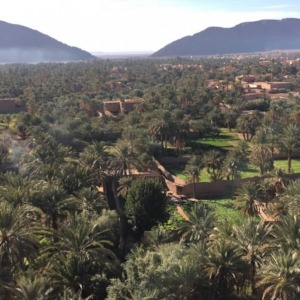 The drastic situation of the Figuig farmers is directly tied to the worsening relations between Algeria and Morocco, as cannabis trafficking is the unlikely real reason behind the closing, though remotely possible. The Western Sahara conflict remains now the main flashpoint in northwest Africa, with Morocco determined to annex the disputed territory, and Algeria determined to prevent it. The entrenched positions of the two governments make it necessary for the world community to intervene and prevent any further escalation of tensions. As Libya is progressively looking for a way out of its crisis, that has destroyed the eastern Maghreb, Algeria and Morocco are now creating a new conflict on the Maghreb’s western flank.


