


Algeria has officially opened a new rail line that links the remote southwest to the Mediterranean, a move with...
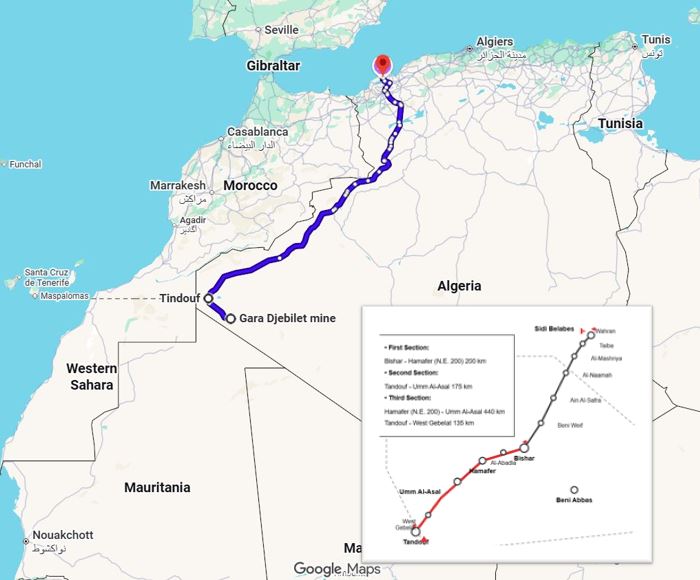

Algeria has officially opened a new rail line that links the remote southwest to the Mediterranean, a move with...
Algeria is continuing a broad, state-led investment drive focused on basic infrastructure, spanning roads, railways,...
A nationwide strike by freight transport operators that began last Thursday is increasingly affecting daily life in...
Despite the unsettling political realities of Tunisia, the country's equity market closed 2025 with one of its...
Algeria’s 2026 finance law, officially published in the government gazette on Wednesday and entered into force on...
Morocco is once again testing the boundaries of app-based urban transport, reopening a politically sensitive debate...
After several years of economic strain, Tunisia showed signs of gradual stabilization over the past 24 months. While...
Israel has approved a long-term natural gas export agreement that will channel roughly 131 billion cubic meters of gas...
Ryanair, Europe’s largest low-cost airline by passenger volume, plans to establish a new operational base at...
Wuhan Yangluo Port Services, a Chinese state-linked entity active across trade, logistics, finance, and investment,...
Allegations of unfair competition and labeling disputes are straining relations between Morocco and the European Union...
Algeria has activated its 5G mobile network, with the formal launch occurring on December 3rd in Algiers. The...
Thousands of employees in Tunisia’s banking, financial, and insurance sectors observed a remote strike on Monday and...
Morocco's 2025-26 agricultural season faces mounting difficulties due to sustained drought and diminishing water...
Israeli Prime Minister Benjamin Netanyahu this week referred in court to a “historic” natural gas deal with Egypt,...
By MondAfrique: Mali is in the grip of an unprecedented fuel crisis—a crisis now spilling into Senegal. The vital...
Libya is pressing ahead with a broad-based energy revival that combines renewed foreign exploration, fresh domestic...
When European and Egyptian leaders convened in Brussels for their first‑ever EU–Egypt Summit on 22 October 2025, the...
Mali’s capital has grown quieter in the dark. Across Bamako and beyond, entire neighborhoods now spend long nights...
Egypt’s foreign minister warned last week that Houthi attacks on commercial shipping in the Red Sea have cost the...
Egypt has raised domestic fuel prices sharply as part of a multi-faceted effort to stabilize the country's economy...
Algeria’s state-owned energy company Sonatrach has signed a $5.4 billion exploration and production agreement with...
Algeria’s draft finance law for 2026 marks a significant increase in public expenditure, with total spending projected...
A new rule requiring small and medium-sized Tunisian businesses to provide a 20% bank guarantee for service contracts...
In Nouadhibou, Mauritania’s bustling fishing hub, the docks don’t hum the way they once did. Factories that once...
An international arbitration panel has ordered Niger to halt any sale or transfer of uranium currently at the center...
Morocco’s central bank held its key interest rate steady at 2.25% following its September 23, 2025 meeting, reflecting...
Algeria's role as Spain's top natural gas provider is back in the spotlight. After a significant two-year diplomatic...
Algeria just made a big splash on the global stage, officially joining ASEAN as a partner (What is Asean: An...

Morocco isn’t making much noise about it, but a subtle shift is taking place in how the country handles foreign...

In Senegal, drivers are feeling the pinch as fuel prices soar to the highest levels in the entire WAEMU region—even...

Egypt faces a deepening energy crisis as natural gas production crashes 39%, forcing a return to costly LNG imports...
Libya’s energy sector is experiencing renewed interest, with billions in foreign investment and key infrastructure...
The energy sector appears to be the only bright spot in the Libyan economy. The sector is experiencing significant...
U.S. tariffs have not yet affected consumer spending in the Maghreb, but as the tariffs are sending shockwaves through...
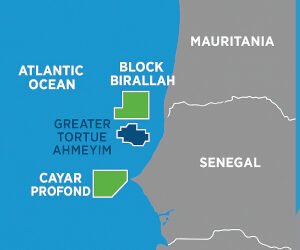
The first shipment of liquefied natural gas (LNG) from the Grand Tortue Ahmeyim (GTA) project, located offshore...
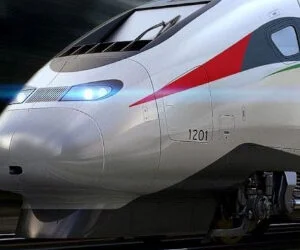
Morocco is moving full steam ahead with its high-speed train projects ahead of the 2030 FIFA World Cup, which it will...

On Thursday, February 20, 2025, Algeria opened the first of five planned seawater desalination stations, located in...
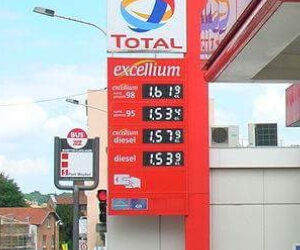
TotalEnergies has exited Mali, finalizing the sale of its operations to Coly Energy Mali, backed by Bénin Petro. While...
A stranded oil platform off the coast of Bizerte, Tunisia, has prompted investigations and rescue operations involving...

BP has officially launched gas production at the Grand Tortue Ahmeyim (GTA) field, a major cross-border energy project...

By Arezki Daoud - Foreign mining companies in the #Sahel are experiencing a nightmare scenario. Escalating tensions in...

Lafarge’s indictment for financing terrorism reveals corporate entanglements with ISIS to maintain operations in...