
Maghreb Edition

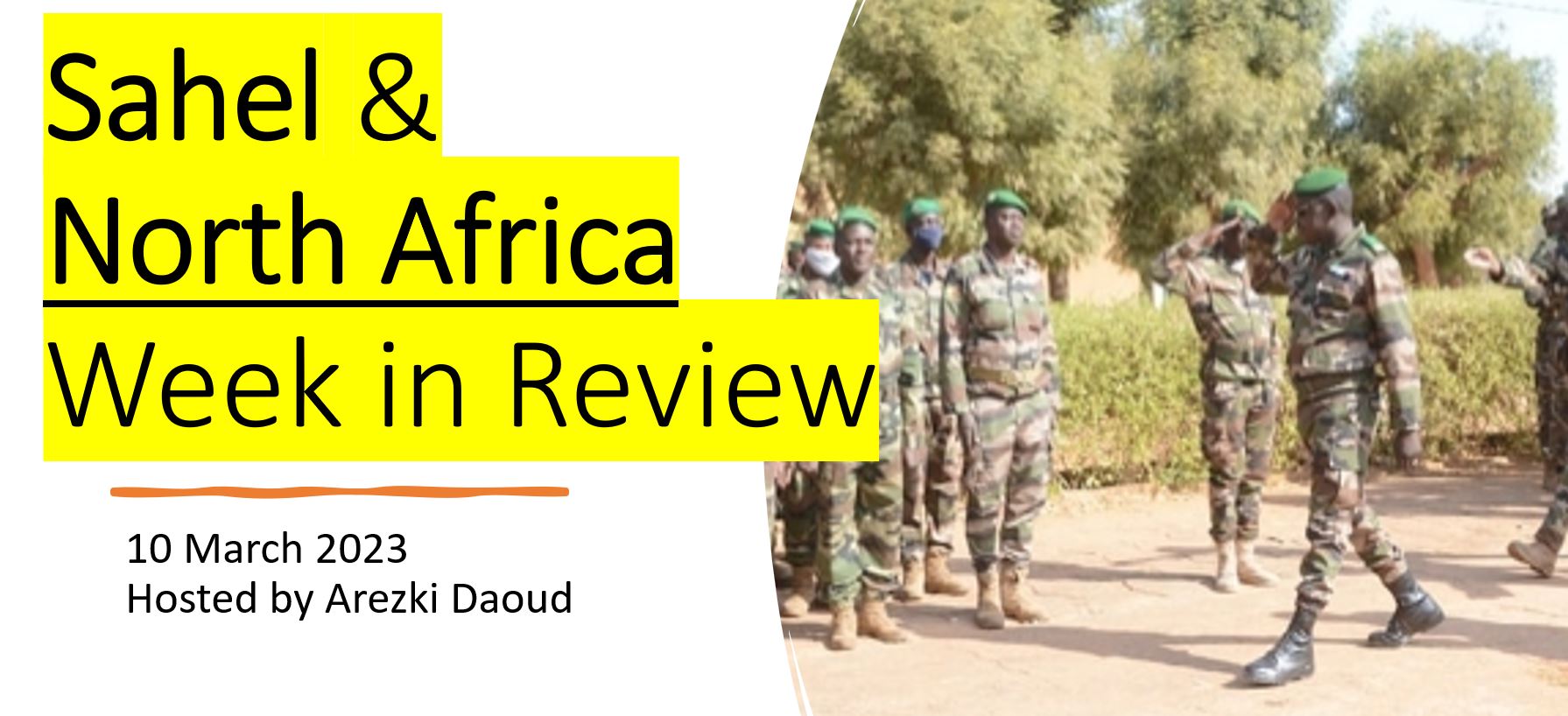
Sahel and North Africa Week-in-Review: Mali and Tunisia remain center stageF

Posted On 13 March 2023

Number of times this article was read : 1299

Welcome to this week-in-review episode, for the period ending 10 March 2023, where we look at some of the key events affecting the geopolitics of North Africa and the Sahel. Your host is Arezki Daoud, principal analyst at MEA Risk LLC and editor of The North Africa Journal. In the Sahel, the general state of insecurity, as well as the atmosphere of transition due to the take over of power by military juntas, have had a dominant play in the Sahelian context. In North Africa, the dominant story may very well be Tunisia, with the president there increasing his control of the government, expanding assaults on human rights and making mistakes that could cost Tunisia billions in lost loan opportunities.

Click on the image below to go to youtube, or listen on Anchor or in any major podcast platform
 

Subscribe to Urgent Notifications and Newsletter

Most Recent Stories from the Region

Energy: Africa’s LNG surging to global leverage

Africa is no longer just a fallback option in liquefied natural gas. With Nigeria boosting capacity, Algeria reinforcing its role as a core supplier to Europe, and Mozambique building one of the world’s biggest LNG hubs, the continent is turning into a strategic supplier for Europe and Asia, offering both new volumes and shorter, more flexible delivery routes.

Libya: Pakistan Steps In as Surprise Broker to Unify Libya

Pakistan has quietly begun mediating between Libya’s rival authorities in the east and west, pushing a three‑year power‑sharing transition backed by Saudi Arabia and coordinated with the United States in a bid to reunify the country’s fragmented institutions.

Written by The North Africa Journal

The North Africa Journal is a leading English-language publication focused on North Africa. The Journal covers primarily the Maghreb region and expands its general coverage to the Sahel, Egypt, and beyond, when events in those regions affect the broader North Africa geography. The Journal does not have any affiliation with any institution and has been independent since its founding in 1996. Our position is to always bring our best analysis of events affecting the region, and remain as neutral as humanly possible. Our coverage is not limited to one single topic, but ranges from economic and political affairs, to security, defense, social and environmental issues. We rely on our full staff analysts and editors to bring you best-in-class analysis. We also work with sister company MEA Risk LLC, to leverage the presence on the ground of a solid network of contributors and experts. Information on MEA Risk can be found at www.MEA-Risk.com.

