MEA RISK’s SHIELD & ALERT notifications: Access requires installing Shield & Alert mobile application. More info on S&A here or click here to signup and install

Nigeria: Questions Mount Over U.S. Airstrikes in Northern Nigeria$

By Leslie Varenne, MondAfrique: The American strikes carried out in Nigeria on Christmas Day raise serious questions. Beyond the confusion surrounding the objectives of the operation, inconsistencies in official statements, and the unclear nature of the targets, the...

Nigeria grapples with end of fuel subsidyF

By Alexandre Martins Lopes: Nigerians are struggling with surging fuel prices after newly elected President Bola Tinubu declared an end to popular subsidies, a move analysts and experts said was long overdue. On his first day in office, Tinubu kept to his campaign...

The Nigeria Precedent: Why Degrading One Group Won’t Secure MaliF

Posted On 27 July 2026

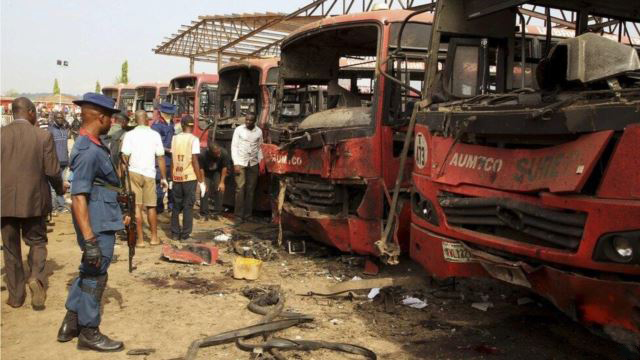
nigeria terror attack

Since late December 2025, US Africa Command has been conducting airstrikes in northern Nigeria alongside the Nigerian military, targeting ISWAP and Boko Haram fighters. The campaign escalated in May 2026 into a joint offensive combining special forces raids with repeated rounds of strikes; Nigerian authorities credited the operation with killing roughly 175 militants, including senior ISWAP commander Abu-Bilal al-Minuki.

Set against that campaign, the scale of what it was meant to fix looks different. Boko Haram and ISWAP are Nigeria’s oldest and most internationally visible security problem, but they are no longer its only one, and arguably not even its largest by body count. Bandit groups across Zamfara, Katsina, Kaduna, Niger and Sokoto states, intercommunal farmer-herder violence in the North Central region, and a kidnapping economy spanning most of the country have driven a toll that rivals or exceeds the northeastern insurgency: independent trackers have logged thousands of killings a year nationally outside the northeast, with Kaduna State regularly ranking among the two or three worst-hit in the country. Human Rights Watch’s account of 2025 describes killings, kidnappings and armed-group raids running concurrently across the Northeast, Northwest and North Central zones, with Nigerian security forces themselves — including their own airstrikes — implicated in civilian deaths.

The night of July 26 supplied a fresh data point. Gunmen stormed Naridon village in Kauru Local Government Area, Southern Kaduna — hundreds of kilometers from the northeastern front where the US-Nigeria campaign is concentrated — killing at least 30 people, including eight children. Residents described houses burned, a family that lost five children in one night, and a three-hour assault that met no timely security response despite military and police units stationed nearby. Village officials pointed to a familiar and unresolved culprit: no motorable access road to bring help in or let people out.

The report doesn’t name ISWAP, Boko Haram, or any group tied to the US campaign — “suspected terrorists” is as specific as it gets, and Southern Kaduna’s violence has long been driven by armed bandit groups and communal conflict, a different actor set from the one being bombed in the northeast. That’s precisely the point. Even a fully successful air campaign against ISWAP and Boko Haram would leave the machinery that produced Naridon almost entirely untouched: the absent roads, the thin and slow-to-arrive security presence, the parallel conflict economies of banditry and kidnapping that kill Nigerians in numbers comparable to the jihadist insurgency. Bombing a single network, however precisely, does not add up to a secure Nigeria. It adds up to a secure northeast and an unsecured everywhere else.

That’s the pattern worth weighing before Washington opens an eighth front. JNIM, the ISWAP equivalent in the Sahel, is a real and growing threat in Mali, and degrading it by airstrike is achievable in the narrow sense that Nigeria’s strikes have degraded ISWAP’s leadership. But Mali’s insecurity, like Nigeria’s, is not reducible to one group: a Tuareg rebel coalition holds territory in the north, the Islamic State’s Sahel affiliate operates alongside JNIM, and a junta already reliant on a Russian mercenary force has failed to stabilize the country even with an outside partner in the fight. An air campaign that succeeds against JNIM on its own terms would still leave Mali facing most of the same problem it has now.

And an eighth front is exactly what’s on the table. The Trump administration is weighing military action against JNIM in Mali, according to current and former US officials cited by the Washington Post — a move that would make Mali the eighth country where Trump has ordered strikes since the start of his second term. Officials inside the administration are reportedly split on whether to proceed, with National Security Council counterterrorism director Sebastian Gorka said to be among the strongest advocates for action. Part of what’s driving the push, per that reporting, is a longer-standing US effort to secure overflight rights over Malian territory, alongside a broader campaign to steer North and West African governments toward buying American security equipment and services instead of relying on Russia.

That last point cuts both ways as a rationale. Washington’s case for striking JNIM leans partly on showing Sahelian governments that American partnership beats Russia’s, whose mercenary presence in Mali has manifestly failed to contain the group. But that same Russian presence, operating alongside the Malian military, is what analysts warn makes a US strike riskier than the Nigeria comparison suggests. Corinne Dufka, one of the analysts consulted by the Post, cautioned that a strike could backfire by giving JNIM a reason to start targeting Americans in the region, turning a campaign meant to degrade the group into one that internationalizes the target list instead. Layer that risk onto the Nigeria precedent, where an air campaign against the named enemy has run for seven months without denting the country’s overall insecurity, and the Mali case for airpower looks less like a fix and more like a bet that a narrower, harder problem will succeed where a broader, more familiar one hasn’t.

Recent News from Nigeria

Nigeria Adjusts Airstrike Strategy Under Expanded U.S. Security Cooperation$

Nigeria is modifying how it conducts air operations against armed groups under a revised security arrangement with the United States. The new framework places greater emphasis on U.S. intelligence and reconnaissance support while shifting operational responsibility to Nigerian forces. The approach reflects Abuja’s effort to balance external assistance with domestic control amid ongoing security challenges in the country’s northwest.

Nigeria: Questions Mount Over U.S. Airstrikes in Northern Nigeria$

The U.S. airstrikes carried out in northern Nigeria on Christmas Day have triggered confusion and skepticism across the region. Conflicting statements from Washington and Abuja, uncertainty over the identity of the targeted groups, and reports from strike locations where no militants were found have raised serious questions about the operation’s objectives. In an already fragile security environment, the lack of clarity risks adding instability rather than addressing Nigeria’s complex security challenges.

Shield and Alert Nigeria