
Social, Labor
and Human Issues
Morocco Detains Civic Activist Amid Online Speech Concerns
Moroccan authorities have detained Mohammed Khalif,a Casablanca-based member of the youth movement GenZ212, following a home search and seizure of his computer. Charges have not yet been publicly disclosed. His arrest comes days after another GenZ212 member was prosecuted over alleged online incitement, raising questions about the legal climate surrounding youth activism and digital expression in Morocco.
Tunisian Women’s Rights Group Warns Early Retirement Proposal Could Undermine Female Labor Participation
A proposed law allowing women in Tunisia’s private sector to retire voluntarily at age 50 has drawn sharp criticism from a leading women’s rights organization. Advocates argue that the measure could undermine female labor participation, limit career advancement, and strain the country’s already fragile social security system.
Morocco: Employment Gains Concentrate in Urban Centers as Rural Areas Fall Behind
Morocco’s labor market showed strong job creation in 2025, but the gains were overwhelmingly concentrated in urban areas. While cities absorbed nearly all new employment, rural regions continued to lose jobs, exposing a widening divide that leaves young people, women, and rural workers increasingly disconnected from the recovery.
Cyclone Harry’s Hidden Toll: NGOs Fear Up to 1,000 Migrants Lost at Sea
Up to 1,000 migrants may have vanished in the Central Mediterranean during Cyclone Harry, far more than the 380 people officially listed as missing by maritime authorities, according to humanitarian groups working on the Tunisia–Libya route. The Italian NGO Mediterranea Saving Humans says testimonies from coastal communities around Sfax and from migrants’ families suggest dozens of boats sailed into the storm and never returned, turning what was reported as a series of shipwrecks into what advocates describe as a “hidden catastrophe” at sea.
MORE ARTICLES
French Law Eases Path to Nuclear Test Compensation for Algerian and Polynesian Victims
France’s National Assembly has unanimously approved a reform that makes it easier for people exposed to French nuclear tests in Algeria and Polynesia to obtain compensation, replacing an onerous case‑by‑case causality test with a presumption of exposure for those who were present in designated test zones and later developed recognized radiation‑linked illnesses.
Flashpoints: In Southern Chad, A Local Clash Reveals Deeper Fragility
Clashes near the town of Korbol in southern Chad on January 13, 2026, left soldiers and rebel fighters dead after the army issued a 48‑hour ultimatum to the Movement for Peace, Reconciliation and Development. The incident barely registered internationally, yet it captures a familiar cycle in Chad’s politics: armed groups rejecting disarmament, a government relying on military pressure, and border regions absorbing the costs. Looking at Korbol helps explain how under‑reported local flashpoints quietly sustain instability across the country.
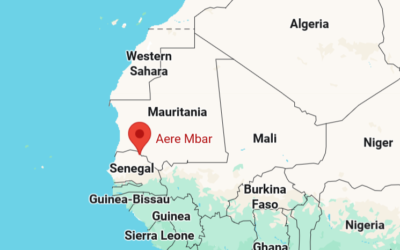
Local Conflicts: State-Imposed Land Pact Struggles to Calm Tensions in Brakna, Mauritania
Authorities in Mauritania’s Brakna region have forced a truce between rival farming communities after deadly clashes over fertile land in the Waalo zone. The agreement, signed in Aleg under the authority of the regional governor, halts direct confrontations and routes all complaints through the administration, but accusations of bias and political interference show that trust in the state’s land governance remains badly shaken.
Africa Cup of Nations (AFCON 2025) in Morocco: Strong Hosting, Weak Crisis Management
Morocco’s hosting of the 2025 Africa Cup of Nations was widely praised for its stadiums, logistics, and overall organization, but the chaotic final in Rabat told a different story. A stoppage in play, disorder in the stands, and now a controversial set of disciplinary rulings from the continental federation have raised questions about how African football manages its biggest pressure points. The real issue is no longer just who lifted the trophy, but whether the institutions around the game can handle a final as the ultimate stress test.
Climate: Severe Winter Rains Shut Down Schools in Northern Morocco This Week
Schools across Ksar El Kébir have been closed from February 2 to February 7 after heavy winter rains caused flooding and disrupted transportation in the city. Authorities cited safety concerns and difficult access to school facilities as emergency response operations continue in northern Morocco.
Europe’s New Migration Rules Shift Pressure South to North Africa
As the European Union prepares to implement its revised migration framework in mid-2026, coordination between Italy and North African states is already reshaping how migration is managed across the Mediterranean. The new approach shifts operational responsibility away from EU territory and toward transit countries in the Maghreb, with a growing focus on returns rather than border enforcement. While framed as regional cooperation, the emerging system raises questions about governance, funding transparency, and the capacity of transit states to absorb migrants who are unable to move forward or return home. The result may be fewer arrivals in Europe, but increased pressure and instability along the southern Mediterranean.
Algeria: Supply Disruptions and Rising Food Prices Amid Transport Strike
A nationwide freight transport strike in Algeria is disrupting food supply chains and driving sharp price increases across local markets. Reduced truck movements have slowed deliveries to wholesale distribution hubs, limiting the availability of fruits and vegetables and placing pressure on household budgets. Key agricultural and commercial regions are reporting thinning stocks, while retailers warn that prolonged disruption could exhaust remaining supplies. The situation highlights structural vulnerabilities in logistics networks and the direct link between transport continuity, food availability, and price stability.
Irregular Migration to Spain Falls Sharply in 2025 With Decline in Atlantic Crossings
Irregular migration to Spain declined significantly in 2025 following a record year in 2024, according to official figures. The drop was driven primarily by a sharp reduction in sea crossings to the Canary Islands, long one of Europe’s most dangerous migration routes. Enhanced maritime surveillance and expanded cooperation between Spain, the European Union, and key departure countries in West and North Africa played a central role in reducing Atlantic crossings. At the same time, arrivals to Spain did not disappear but shifted geographically, with increased landings reported in the Balearic Islands via the western Mediterranean. The figures highlight how enforcement measures can reshape migration patterns while leaving underlying pressures and humanitarian risks largely unchanged.

Stay Up to Date With The Latest News & Updates
Access Premium Content
Subrscribe to The North Africa Journal and get access to analysis going beyond news.
Join Our Newsletter
Receive a free weekly newsletter to your email. Sent every Thursday.
Follow Us
We are in many social media platforms. Follow us here.