Nigeria’s Woro massacre in early February 2026 was a large‑scale attack on two mainly Muslim farming communities that left Muslim and Christian civilians dead, including adults and children, community leaders, and people living on the economic margins. Local leaders...
MEA RISK’s SHIELD & ALERT notifications: Access requires installing Shield & Alert mobile application. More info on S&A here or click here to signup and install
Nigeria Adjusts Airstrike Strategy Under Expanded U.S. Security Cooperation
Nigeria is adjusting how it conducts air operations against armed groups as part of an updated security arrangement with the United States. Under the new framework, Nigerian fighter aircraft will increasingly rely on U.S. reconnaissance and intelligence-gathering...
Nigeria: Questions Mount Over U.S. Airstrikes in Northern Nigeria
By Leslie Varenne, MondAfrique: The American strikes carried out in Nigeria on Christmas Day raise serious questions. Beyond the confusion surrounding the objectives of the operation, inconsistencies in official statements, and the unclear nature of the targets, the...
U.S. Immigration Policy and the Changing Landscape of Africa-U.S. Travel
As the United States prepares to implement a new round of immigration and visa policy changes in 2026, the effects are being felt across Africa and parts of the Middle East. What began as a technical overhaul of screening and enforcement procedures has evolved into a...
Nigerian president Tinubu under pressure to avoid war with northern neighbor Niger
By Camille Malpat with Aminu Abubakar in Kano, Nigeria: Political leaders in Nigeria are urging President Bola Tinubu to reconsider a threatened military intervention against junta leaders in neighbouring Niger, ahead of a Sunday deadline to reinstate the country's...
Nigeria grapples with end of fuel subsidy
By Alexandre Martins Lopes: Nigerians are struggling with surging fuel prices after newly elected President Bola Tinubu declared an end to popular subsidies, a move analysts and experts said was long overdue. On his first day in office, Tinubu kept to his campaign...
Nigeria: New president grapples with many challenges and opportunities
Posted On 12 July 2023
By Patrick Markey:
Just a month in power, President Bola Ahmed Tinubu has already received foreign entrepreneurs and investors at his villa, telling them Nigeria is open for business after a flurry of surprise economic reforms. The former Lagos governor added a diplomatic step this week, becoming chairman of the West Africa bloc ECOWAS, with a call for more democracy and cooperation in the region wracked by coups and jihadists.
Tinubu, 71, has made a swift start, defying critics fearful of his health and appearing determined to propel Africa’s most populous nation back into the regional spotlight. “Nigeria, we are back,” he said, accepting the rotating presidency of 15-member Economic Community of West Africa States in Guinea Bissau. His financial overhaul — floating the naira currency and ending a fuel subsidy — and the push to promote Nigeria’s global role broke from former president Muhammadu Buhari’s more low-key approach.
Supporters see the man known as the “Godfather of Lagos” for his political acumen bringing his experience to the regional stage. “Everybody is looking up to Nigeria, especially in Africa and the ECOWAS region and President Tinubu is ready to take up the gauntlet,” Dele Alake, a government spokesman, said. But while business chiefs from Bank of America to Shell and Western partners lined up to praise Tinubu for his swift reforms, the Nigerian leader still must tackle vast domestic financial difficulties.
Elected in February in a highly contested vote, Tinubu last month acknowledged his early policies caused short-term pain for Nigerians with higher fuel, transport and food costs.
Huge security challenges
And while he pushes Nigeria’s role as a regional heavyweight in West Africa, at home his own country struggles with huge security challenges. “It is interesting to see Tinubu’s international focus, the key risk is being seen as a paper tiger,” said Cheta Nwanze, partner at SBM Intelligence, a Nigerian risk advisory. “Only Nigeria is in the position to corral the region, but it will be difficult for Nigeria to do that when the homefront is still a mess.”
The continent’s biggest economy and a top oil producer, Nigeria has always been a regional player, sending troops on peacekeeping missions and offering leadership in multilateral African organisations. Under Tinubu’s predecessor, former army commander Buhari, Nigeria dislodged jihadists from the northeastern areas they once controlled, helped by troops from neighbouring Chad. But critics say eight years of his unorthodox economics deterred investors while massive theft of oil undermined the petroleum sector. Nicknamed “Baba Go-Slow” by critics, Buhari also mostly kept a lower profile on the global stage.
“Nigeria’s leadership role within the West African sub-region has declined a little during Buhari’s tenure due to a number of reasons including some policy decisions,” said Professor Kabiru Sufi, public affairs senior lecturer at Kano College. “I believe Tinubu stands a chance to redeem Nigeria’s standing and status. His recent election as ECOWAS chairman is a good start.” But the ECOWAS region is in a delicate spot. Three member states are now governed by military juntas after coups and jihadists control large parts of Burkina Faso. Facing a wave of anti-French sentiment, France has also withdrawn its military presence from Mali, Burkina and Central African Republic.
‘Timely, crucial reforms’
Even before he turns his attention outward, Tinubu faces enough challenges at home. Beyond the 14-year jihadist conflict, insecurity has spread to many parts of Nigeria, where bandits carry out mass kidnappings, intercommunal attacks destroy villages and separatist tensions simmer in the southeast. The economic outlook is equally as complex. Tinubu quickly reversed some of Buhari’s economic policies, ending a costly fuel subsidy meant to keep petrol prices low and lifting controls on the naira currency.
We are excited with the new government, some of the early decisions they have taken,” Bank of America international executive Bernard Mensah told reporters in Nigeria this month, echoing other multinationals visiting Tinubu. But, already hit hard by inflation, Nigerians now must deal with a naira devalued 40 percent and tripled fuel prices biting into their family budgets.
About 40 percent of Nigerians or nearly 83 million people already live below the poverty line, according to the World Bank. In a report, the bank welcomed Tinubu’s early reforms as “timely and crucial”, but called for more social programmes to shield the most vulnerable. “Without compensation, many households could be pushed into poverty,” it warned.
Along with the fuel subsidy and forex controls, public debt is also a risk. Last year, Nigeria spent 96 percent of its revenues on debt servicing alone, according to SBM. “Removing the fiscal and monetary distorters of fuel and FX subsidies are the first two crucial things,” its report said. “Right behind these two is the matter of debt management.”
AFP
Recent News from Nigeria
The Nigeria Precedent: Why Degrading One Group Won’t Secure Mali
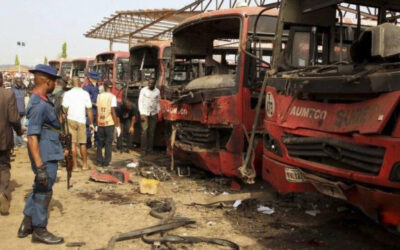
Seven months into an air campaign against ISWAP and Boko Haram, Nigeria’s broader insecurity crisis remains largely untouched. As Washington weighs a similar strike option against JNIM in Mali, the Nigeria case raises hard questions about what airpower can actually buy.
Nigeria: More than 160 people killed in Muslim communities in Kwara State
More than 160 people were killed in predominantly Muslim farming communities in Kwara State, Nigeria, after villagers reportedly refused to accept an extremist group’s strict religious rule.
Nigeria Adjusts Airstrike Strategy Under Expanded U.S. Security Cooperation
Nigeria is modifying how it conducts air operations against armed groups under a revised security arrangement with the United States. The new framework places greater emphasis on U.S. intelligence and reconnaissance support while shifting operational responsibility to Nigerian forces. The approach reflects Abuja’s effort to balance external assistance with domestic control amid ongoing security challenges in the country’s northwest.