



I like the Dominican Republic. It is a joyful country with wonderful people, and well… it is the Caribbeans, after all. I make frequent visits there, given the short distance from Miami, at just about an hour-and-a-half flight. Although it would be fun to sail from Miami to the DR, taking a flight is better if you don’t have too much time to enjoy a cruise.
These 14 people went to the DR, but they did not intend to do so. They did not fly, like almost all of us would do, nor they arrived alive. InfoMigrant says a boat carrying 14 migrants from Senegalese, Mauritania and other West African nations did indeed reach the shores of Rio San Juan, east of the famous resort beach of Sosua in the Dominican Republic, except they were dead, and their bodies were in advanced decomposition. While this event in itself is sad, it happens more often than we know. Most of the time, the deaths occur through drowning. This time, it is remarkable that the boat, a simple canoe, managed to reach the DR. This means that the victims have died of thirst, hunger and despair.
Looking at the current migratory patterns, the victims most likely sought to reach Spain, going along the Atlantic coast of the northwestern part of Africa. Their canoe was headed to the Spanish Canary Islands based on evidence collected by the Dominican authorities. Their journey from the African Atlantic to the Caribbeans is nearly 6,000 kilometers, or 3,600 miles, undertaking by a simple boat, which finished in tragedy, with the oldest victim no more than 33 years of age.
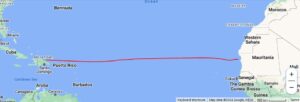 West African migrants on their journey to the Canary Islands face unprecedented risks, and the biggest one is the strength of the currents on the mighty Atlantic. A small canoe cannot match the power of the ocean’s currents to forcefully move boats from the African coast to the Caribbeans and Latin America. This year has been particularly deadly, with nine African migrants found dead in April off the coast of Brazil after their canoe drifted from the coast of Mauritania.
The data on the casualties of failed attempts to reach Europe, in particular Spain, are staggering. InfoMigrant notes that in all, more than 4,800 migrants died during the first five months of 2024 while trying to reach the Canaries, based on estimates calculated by the Spanish NGO Caminando Fronteras. At the same time, nearly 21,500 people have landed in the archipelago so far this year, according to the Spanish Interior Ministry.

