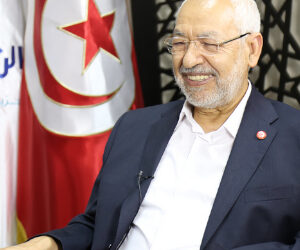
Youssef Chahed (: يوسف الشاهد; born 18 September 1975) is a who served as the 14th from 27 August 2016 to 27 February 2020. He served as Secretary of State for Fisheries and Minister of Local Affairs in the past.
He was a member of the party until he formed . By profession, he is an agricultural engineer, researcher and university professor. He was elected president of the newly founded party on 2 June 2019.
He is a member of The .
Education and career
[]Born in Tunis in 1975, Youssef Chahed studied to become an at the National Agricultural Institute of Tunisia, where he graduated as valedictorian in 1998.
He then joined the in . He graduated in 1999, obtaining a (DEA) in and and in 2003 a in Agricultural Economics under the direction of Jean-Christophe Bureau. The title of his DEA was "Measuring the impact on the welfare of tariff cuts on agricultural products: an application of the Trade Restrictiveness Index (TRI) to the ," and his doctoral thesis was on "measuring the impact of agricultural trade liberalization on trade and welfare".
Until 2009, he taught at the Higher Institute of Agriculture in France and in other countries as a visiting professor. He speaks , , , and fluently.
Prime minister
[]On 6 August 2016, after President of the Government lost a confidence vote in parliament, Chahed was nominated by the party to succeed Essid as head of the Government. On 26 August 2016, his Government was approved by the with 167 votes in favour out of 194 votes cast and he was therefore appointed prime minister by the , . Chahed has been described as "previously unknown" in the political scene before this role.
Nate Grubman, a scholar at Stanford University, writes about Chahed's tenure as prime minister:
"As prime minister, Chahed initially tried to portray himself as an anticorruption warrior. His first shot was the arrest of businessman Chafik Jarraya and a number of others allegedly involved in smuggling. But it was difficult to discern whether Chahed's move against Jarraya was a neutral application of the law or an attempt to hamstring his political rivals."
In 2019, the Chahed government banned the after the . The same year, Chahed announced his candidacy for the .
Austerity
[]In 2018 protests erupted as a reaction to the newly passed Finance Act which took effect on 1 January, that raised taxes on , , housing, internet usage, hotel rooms and foods such as fruits and vegetables. Customs taxes on cosmetics and some agricultural products were also raised.
The , an alliance of opposition parties, called for continued protests against the government's "unjust" austerity measures while Tunisian Prime Minister Youssef Chahed denounced the violence and appealed for calm, claiming that he and his government believes that 2018 "would be the last difficult year for the Tunisians".
Post-premiership
[]Following President 's July 2021 suspension of parliament, Chahed became one of numerous former officials and opposition figures prosecuted in cases that human rights organizations including Amnesty International and the International Commission of Jurists have described as politically motivated. Two separate cases were brought against him, both .
In one proceeding, government prosecutors alleged that Chahed had received funds from and channeled them to opposition leader to destabilize the state. The charge drew international attention because Kissinger had died in November 2023, before the alleged conduct was said to have occurred.
Since seizing power in 2021, President Saied has dismantled judicial independence in Tunisia by dissolving the body that oversaw judges, dismissing 57 of them by decree, and giving himself the power to hire and fire judges and prosecutors at will.
- Media related to at Wikimedia Commons