FOCUS ON
LIBYA
Click here to sign up for free weekly email
Email recaps are sent every Thursdays.
Sign up today
Southern Libya Boils Over: Three Haftar Soldiers Killed in Border Raid Near Niger
Three soldiers loyal to Libyan commander Khalifa Haftar were killed and several others captured in coordinated attacks on border posts near Niger, underscoring how southern Libya has become a key fault line in the country’s fractured security landscape. Fighters claiming to represent “revolutionaries of the South” say they are targeting Haftar’s forces over dire living conditions and alleged resource plunder, as cross-border armed groups test the limits of state control from Al-Tum to the Salvador Pass.

With Saif al-Islam Killed, Gaddafi Dynasty’s Political Ambitions All But Collapse
Saif al‑Islam Gaddafi, the son of Libya’s longtime ruler Muammar Gaddafi and a former presidential candidate, has been killed in the western town of Zintan by armed attackers. His death, confirmed by family and advisers, raises fresh questions about Libya’s fragile political balance.
Cyclone Harry’s Hidden Toll: NGOs Fear Up to 1,000 Migrants Lost at Sea
Up to 1,000 migrants may have vanished in the Central Mediterranean during Cyclone Harry, far more than the 380 people officially listed as missing by maritime authorities, according to humanitarian groups working on the Tunisia–Libya route. The Italian NGO Mediterranea Saving Humans says testimonies from coastal communities around Sfax and from migrants’ families suggest dozens of boats sailed into the storm and never returned, turning what was reported as a series of shipwrecks into what advocates describe as a “hidden catastrophe” at sea.
UAE Regional Influence Under Strain Amid Sudan, Libya, Yemen, and Maghreb Frictions
Across Sudan, Libya, Yemen, and the Maghreb, the United Arab Emirates is encountering rising diplomatic friction as regional powers push back against policies seen as destabilizing or misaligned with their security interests. The UAE is facing growing tensions involving Egypt, Saudi Arabia, and Algeria, while sustained scrutiny over Sudan and Yemen is reshaping perceptions of Emirati influence.
Europe’s New Migration Rules Shift Pressure South to North Africa
As the European Union prepares to implement its revised migration framework in mid-2026, coordination between Italy and North African states is already reshaping how migration is managed across the Mediterranean. The new approach shifts operational responsibility away from EU territory and toward transit countries in the Maghreb, with a growing focus on returns rather than border enforcement. While framed as regional cooperation, the emerging system raises questions about governance, funding transparency, and the capacity of transit states to absorb migrants who are unable to move forward or return home. The result may be fewer arrivals in Europe, but increased pressure and instability along the southern Mediterranean.
Libya: Turkey is Here to Stay, Abandons Exit Strategy
Turkey’s parliament has approved a 24-month extension of its military deployment in Libya through early 2028, marking a shift from emergency intervention to formalized long-term strategic positioning. The extension reflects calculated power projection rather than crisis response, with Turkey consolidating assets at Al-Watiya airbase to secure leverage across Eastern Mediterranean maritime disputes, energy corridors, and regional competition dynamics. The mandate complicates the stalled 5+5 withdrawal process by providing diplomatic cover for other foreign actors to maintain their presence, creating a reinforcing cycle where each deployment justifies the others and transforms temporary stabilization into indefinite strategic competition by proxy.
Libya: Protesters Gather at UN Mission in Janzour Demanding Accelerated Elections, Warning of National Collapse
Protesters representing political parties and civil society groups gathered at the UN mission in Janzour demanding immediate implementation of the electoral roadmap and simultaneous presidential and parliamentary elections in April 2026. The demonstrators warned that continued delays would push Libya toward comprehensive collapse and chaos, holding UNSMIL and international actors accountable for deteriorating conditions. They called for elections under the existing dual-government structure, citing successful municipal elections as precedent, and urged escalated civil disobedience to pressure entrenched political institutions.
U.S. Immigration Policy and the Changing Landscape of Africa-U.S. Travel
In 2026, U.S. visa policy is entering a more restrictive phase for large parts of Africa and the Middle East. Countries including Egypt, Morocco, Nigeria, South Africa, Ghana, and Zimbabwe now face higher application costs, expanded biometric requirements, mandatory disclosure of social media and digital histories, and longer processing timelines. At the same time, several Sahel states have responded with reciprocal measures, suspending or banning visas for U.S. citizens. What began as a security-driven adjustment to immigration screening has evolved into a broader diplomatic signal, reshaping mobility, bilateral relations, and perceptions of U.S. engagement across Africa and the Middle East.
Libya Enters 2026 With the Same Political Fragmentation and Sustain Bad Foreign Influence
As Libya approaches 2026, the country remains locked in a prolonged political impasse marked by competing authorities, delayed elections, and sustained foreign involvement. Rival governments and security structures continue to operate in parallel, limiting the ability of Libyan institutions to exercise unified control. Regional and international actors remain deeply embedded in Libya’s political and security environment, shaping outcomes through strategic alliances and informal arrangements. While large-scale conflict has been contained, the absence of a nationally driven political settlement leaves Libya’s sovereignty constrained and its long-term stability uncertain.
The UAE’s Growing Role in African Conflict Zones
Saudi–Emirati tensions over Yemen have reignited a debate about how the United Arab Emirates projects power beyond the Gulf, particularly across Africa and the Maghreb. The public rupture with Saudi Arabia over Yemen has drawn attention to a broader pattern in which Abu Dhabi is accused of using proxy actors, military support, media influence, and selective alliances to shape outcomes in fragile conflict zones. From Libya and Sudan to the Western Sahara file, the UAE has emerged as a consequential external actor whose involvement often intersects with local rivalries, unresolved conflicts, and competing regional interests.
North Africa Tests the Limits of Ride-Hailing as Uber Returns Under Tight Control
Ride-hailing has returned to the political agenda in North Africa, reopening questions governments have been trying to resolve for more than a decade. At the center of the renewed debate is the controlled return of Uber to Morocco, a move that reflects a broader regional recalibration rather than a shift toward liberalization. Inside the sector in Morocco, Egypt, Algeria, Tunisia and Libya.

Libya: The Strange Case of Hannibal Gaddafi: From Exile to Detention to Release
Hannibal Gaddafi, son of Libya’s former dictator Muammar Gaddafi, was released from a Lebanese prison in November 2025 after nearly ten years in detention. Gaddafi was originally kidnapped from Syria in 2015 by militants seeking information about the 1978 disappearance of Lebanese cleric Musa al-Sadr—a case that has strained Libya–Lebanon relations for decades.
Libya: NOC Expands Exploration as Libya Targets 1.6 Million Barrels by 2026
Libya’s energy sector is gaining momentum as Sonatrach and other major players resume exploration and drilling across the Ghadames Basin. Recent activity includes Sonatrach’s return after a decade-long halt, new exploratory wells by the National Oil Corporation, and successful deep-layer production tests by Zueitina Oil Company.

Washington Returns to Libya’s Frontlines in Bid to Counter Russia and Reunify Militias
The United States is reengaging in Libya through Flintlock 2026, a major U.S. Africa Command exercise set for next spring near Sirte. The training will bring together Libya’s rival eastern and western forces for the first time since 2011, signaling a renewed American role in efforts to unify the country’s military, counter extremist threats, and curb Russian influence in North Africa.
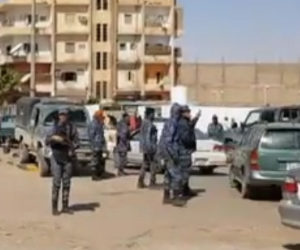
Libya’s Path to Stability: Still Blocked by Fragmentation and Armed Rivalries
Libya ends 2025 still divided between rival governments and dominated by militias. Clashes, rights abuses, and stalled reforms keep the security outlook fragile. Limited local elections show resilience, but lasting stability depends on unified institutions and accountability.
Depression: Tunisia, Morocco, and Libya Among Africa’s Highest Prevalence Countries
North Africa has some of Africa’s highest depression rates: Tunisia (7.57%), Morocco (6.54%), and Libya (5.72%) all rank in the continent’s top ten according to The African Exponent (2025). Persistent economic challenges, unemployment, and regional instability have driven a surge in mental health issues—particularly among youth—with many cases still untreated due to social stigma and gaps in health services.
The Brutal Downfall of Former French President Nicolas Sarkozy
Former French President Nicolas Sarkozy has been sentenced to five years in prison and fined €100,000 for conspiracy in the alleged Libyan financing of his 2007 campaign. The Paris court’s ruling, immediately enforceable, marks Sarkozy’s second prison sentence and further diminishes prospects of a political comeback.
Libya’s Fragile Peace Shaken Again by Local Violence
Tensions are flaring again in Libya, from deadly street battles in Tripoli’s suburbs to violent protests in Sabratha. The killing of a well-known militia leader and the death of a police officer days apart reveal a deeper unraveling—where everyday disputes turn into...
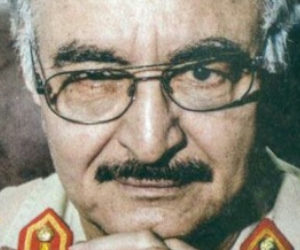
Libya in Perpetual Crisis: How Khalifa Haftar Is Gaining Ground Amid Institutional Collapse
As Libya’s political divide deepens and foreign actors recalibrate their alliances, Khalifa Haftar is emerging as the country’s dominant power broker, leveraging military strength and international diplomacy amid institutional collapse and the rise of financial crimes.
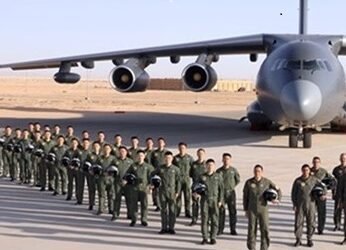
U.S. Trade Policy Is Accelerating China–North Africa Economic and Defense Engagement
U.S. trade tariffs are accelerating China’s push into developing economies, with North Africa emerging as a key frontier.
Connect
You can find us on a few social media platforms. Feel free to connect with us there.