FOCUS ON
TUNISIA
Click here to sign up for free weekly email
Sign up today
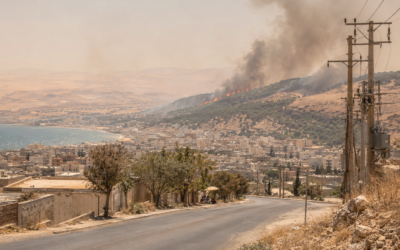
Summer in North Africa: Heat, Fire, and Failing Power Grids
Extreme heat is gripping Morocco, Algeria, Tunisia, Egypt, and Libya at once, with wildfires spreading across Algeria and power grids buckling under demand in Egypt. Regional meteorologists say the pattern reflects a longer-term warming trend rather than a single bad summer.
North African Countries Among World’s Cheapest for Gasoline, Lead Global Rankings
North African countries currently rank among the cheapest places in the world to buy gasoline, according to international price data published in late April 2026. The global average pump price for gasoline stood at around $1.49 per liter, while several North African producers were charging less than half that level. Libya, Algeria and Egypt all sit among the most affordable markets globally — though two non-African countries, Venezuela and Iran, rank between Libya and the rest of the African group in the worldwide table.
Tunisia: Arrest of Opposition Figure Olfa Hamdi Raises Concerns
A Tunisian civil liberties organization has called for transparency and the release of opposition party leader Olfa Hamdi following reports of her detention. With no formal statement issued by authorities several days after the alleged arrest, rights advocates say the silence raises concerns about due process and the state of political freedoms in Tunisia.
Tunisian Women’s Rights Group Warns Early Retirement Proposal Could Undermine Female Labor Participation
A proposed law allowing women in Tunisia’s private sector to retire voluntarily at age 50 has drawn sharp criticism from a leading women’s rights organization. Advocates argue that the measure could undermine female labor participation, limit career advancement, and strain the country’s already fragile social security system.
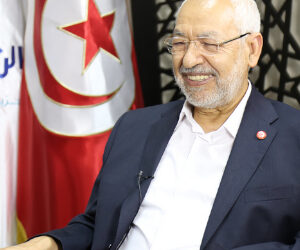
Tunisia Appeals Court Extends Rached Ghannouchi’s Prison Term by 20 Years
Rached Ghannouchi, the 84-year-old leader of Tunisia’s Ennahda party, has had his prison sentence increased to 20 years in a case known as “Conspiracy 2,” pushing his cumulative jail time from multiple convictions to more than four decades. His defense team says he will not seek a final appeal, denouncing the charges as politically driven and warning that the ruling deepens Tunisia’s crackdown on organized opposition.
Cyclone Harry’s Hidden Toll: NGOs Fear Up to 1,000 Migrants Lost at Sea
Up to 1,000 migrants may have vanished in the Central Mediterranean during Cyclone Harry, far more than the 380 people officially listed as missing by maritime authorities, according to humanitarian groups working on the Tunisia–Libya route. The Italian NGO Mediterranea Saving Humans says testimonies from coastal communities around Sfax and from migrants’ families suggest dozens of boats sailed into the storm and never returned, turning what was reported as a series of shipwrecks into what advocates describe as a “hidden catastrophe” at sea.
Europe’s New Migration Rules Shift Pressure South to North Africa
As the European Union prepares to implement its revised migration framework in mid-2026, coordination between Italy and North African states is already reshaping how migration is managed across the Mediterranean. The new approach shifts operational responsibility away from EU territory and toward transit countries in the Maghreb, with a growing focus on returns rather than border enforcement. While framed as regional cooperation, the emerging system raises questions about governance, funding transparency, and the capacity of transit states to absorb migrants who are unable to move forward or return home. The result may be fewer arrivals in Europe, but increased pressure and instability along the southern Mediterranean.
Tunisia: Leading Labor Union in Turmoil
Tunisia’s historic labor union, the UGTT, is facing one of the most serious internal crises in its modern history. Deep divisions within the leadership, questions over legitimacy, and mounting pressure from President Kaïs Saïed have pushed the organization into open turmoil. The possible resignation of Secretary General Noureddine Tabboubi comes as the state moves to strip the union of its traditional role in wage negotiations and social dialogue, signaling a broader effort to marginalize independent labor power. As internal factions clash over leadership, strategy, and the timing of a general strike, the future role of the UGTT as a counterweight in Tunisian political life is increasingly uncertain.
Tunisian Equity Market Posts Record Gains in 2025
Tunisia’s stock market ended 2025 with record-breaking gains, as rising corporate earnings, increased liquidity, and stronger investor participation pushed benchmark indices to historic highs. The rally, now extending into a fifth consecutive year, reflects growing confidence in listed companies and a gradual reallocation of domestic savings toward equities, even as broader economic challenges persist.
Rights Groups Warn of Widening Restrictions on Freedoms in Tunisia
Tunisia’s human rights landscape continues to draw scrutiny as a leading rights organization warns of expanding legal and institutional constraints on civil liberties. A new annual assessment points to the growing use of restrictive legislation, judicial pressure, and security-based governance to regulate political expression, social activism, and media activity. While formal legal structures remain in place, the report argues that the practical exercise of rights is increasingly limited, raising questions about the durability of the rule of law and civic space in the country.
Tunis Appeals Court Upholds Prison Sentence Against Opposition Leader Abir Moussi
A Tunis appeals court has confirmed a two-year prison sentence against opposition leader Abir Moussi, upholding a conviction linked to allegations of digital misinformation and defamation. The ruling, tied to a case initiated by Tunisia’s election authority, comes amid a wider use of legal provisions governing online speech in politically sensitive cases.
North Africa Tests the Limits of Ride-Hailing as Uber Returns Under Tight Control
Ride-hailing has returned to the political agenda in North Africa, reopening questions governments have been trying to resolve for more than a decade. At the center of the renewed debate is the controlled return of Uber to Morocco, a move that reflects a broader regional recalibration rather than a shift toward liberalization. Inside the sector in Morocco, Egypt, Algeria, Tunisia and Libya.
Tunisia Shows Measured Economic Stabilization After Years of Strain
After several years of economic disruption, Tunisia recorded measurable signs of stabilization in 2025. Growth accelerated modestly, inflation eased, and key sectors such as agriculture, tourism, and services supported the recovery. Improved financial indicators, including stronger foreign investment and higher reserves, contributed to cautious optimism. At the same time, structural constraints, employment pressures, and external uncertainty continue to limit the pace of expansion. As Tunisia enters 2026 with a higher growth target, the central question is whether recent gains can be sustained and translated into durable job creation and long-term economic resilience.
Tunisia: Supporters Rally in Tunis to Back the President and Reframe Tunisia’s Uprising
Thousands gathered in central Tunis to mark the December 17 anniversary of the uprising’s start, using the occasion to express support for the president and advance a political narrative centered on sovereignty, rejection of foreign influence, and loyalty to a leader rather than parties or institutions.
Business: Chinese Logistics Platform Scouts Tunisia As Africa Gateway
Chinese state-linked logistics and trade group Wuhan Yangluo Port Services is assessing projects in Tunisia, with a focus on upgrading trade-related institutions and using the country as a potential platform for reaching African markets, signaling a move from exploratory visits toward more concrete scoping of regional logistics roles.
Tunisia’s Main Union Calls Nationwide Strike Amid Political Tensions
Tunisia’s largest trade union, the UGTT, has called a nationwide general strike for January 21, 2025, to protest growing pressure on critics and the suspension of traditional wage talks with the government. The move marks a sharp escalation in a country where the union once brokered democratic compromise but now warns that political centralization, economic hardship, and stalled social dialogue are pushing Tunisia toward a new period of instability.
Washington Initiates Review Process for Possible Terrorism Designations of Muslim Brotherhood Branches
The United States has opened a formal review into whether specific branches of the Muslim Brotherhood meet the legal criteria for terrorism designation, signaling a procedural shift without yet issuing any listing. The process focuses on country-level chapters and remains under evaluation by the State and Treasury Departments.
Tunisia: Wage Dispute Triggers Widespread Bank Shutdowns in Tunisia
A nationwide banking strike in Tunisia has halted operations across major institutions as employees protest falling living standards and demand wage hikes
Tunisia: Economic Pressures Erode Household Purchasing Power
A Fitch Solutions report published in October 2025 finds that the average Tunisian household’s purchasing power has declined by 11.1% since 2019, with real incomes struggling to keep pace with inflation and economic growth. The report notes that while consumption continues to rise, it outpaces GDP growth and savings, deepening the country’s structural economic challenges.
Tunisia: Pollution Uprising in Gabès Turning Into Sustained Protest Movement
Tens of thousands have taken to the streets of Gabès, Tunisia, demanding the shutdown of a polluting chemical complex and drawing national attention to public health, broken government promises, and the urgency of real change. As the crisis escalates, Gabès is testing Tunisia’s ability to respond to grassroots mobilization against environmental and political neglect.
Connect
You can find us on a few social media platforms. Feel free to connect with us there.