the Algerian crisis
Algerian military leaders in state of panic, pushing for violence
The Algerian military has lost its capability to maintain a reasonable level of objectivity. Its senior command, directed by General Gaid Salah, is now in intense panic mode after it failed to abort the ongoing anti-government protests. Such panic mode translates into an extremely dangerous situation that risks not only to destroy the Algerian Republic, but it could turn the Algerian territory into another focal point for outside forces, from the likes of the UAE to the Jihadists, where they would wage another of their proxy wars. And we now have the Libyan template as a clear indication of what can happen should Gaid Salah and his Generals continue on this road.
Listen to MP3 with no video
Download the MP3 file here
To listen on the go, feel free to download the MP3 file
The Algerian military command has done everything it could to undermine the peaceful nature of the protest movement. But everything they used so far did not work, as it did not elicit a violent response by the Algerian people as the hopped, to justify sending military troops to the street.
Listen to our podcasts in global platforms
On the Same Topic
Desert Locusts Stir Fresh Worries in North-West Africa
Small desert locust swarms recently detected along the western Sahara corridor have prompted stepped-up monitoring across parts of North and West Africa, where shifting rainfall can quickly turn quiet desert areas into launchpads for wider infestations.
Algeria and Niger Relaunch Trans-Saharan Gas Pipeline After Diplomatic Freeze
Algeria and Niger have ended months of strained relations and announced the operational launch of the Trans-Saharan Gas Pipeline, a 4,000-kilometer project linking Nigerian gas fields to European markets through Niger and Algeria. The move signals both a diplomatic reset and a renewed push to position North Africa as a strategic energy corridor.
Algeria and Niger Restore Ties, Signaling a Shift in Sahel Diplomacy
Algeria and Niger restored diplomatic relations after nearly a year of tensions triggered by regional security disputes. The return of ambassadors and a planned high-level visit signal renewed cooperation centered on energy development, border security, and regional trade. The rapprochement highlights the strategic importance of the Trans-Saharan Gas Pipeline and reflects broader efforts to stabilize partnerships across the Sahel amid ongoing security and economic pressures.
French Interior Minister Renews Dialogue with Algeria
French Interior Minister Laurent Nunez’s announced visit to Algiers marks a formal attempt to restart diplomatic engagement between France and Algeria after a period of strained relations. Discussions are expected to focus on security cooperation in the Sahel, the handling of deportation orders affecting Algerian nationals, and the case of imprisoned journalist Christophe Gleize. The visit takes place amid shifting regional dynamics, including Algeria’s growing role in Sahel security arrangements and recent signals of economic and political goodwill between the two countries.
French Prosecutors Target Ex-Algerian Minister in Corruption Case Tied to Sonatrach and the ICJ
French prosecutors are investigating former Algerian justice minister and ex-International Court of Justice president Mohammed Bedjaoui over alleged tax fraud, money laundering, and unexplained wealth running into the millions. The case reaches from a controversial ICJ ruling in a Qatar–Bahrain maritime dispute to high-end property deals in France and corruption scandals around Algeria’s Sonatrach, raising broader questions about how international justice, energy contracts, and opaque financial networks can intersect.
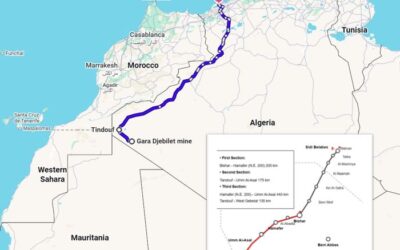
Algeria’s 2,000‑Kilometer Mining Corridor: Rail, Iron Ore, and the Road to the Mediterranean
Algeria’s new rail link between Béchar and the giant Gara Djebilet iron ore deposit in Tindouf is designed as far more than a transport upgrade. By tying the remote southwest directly into Oran and other Mediterranean ports, the single‑track, heavy‑freight line is meant to anchor a 2,000‑kilometer economic corridor that can move millions of tons of iron ore and processed steel products while opening up one of the country’s most isolated regions to passengers, jobs, and investment.